Introduction
Selecting the right bar grating for your industrial or commercial project can be challenging with so many types, sizes, and load ratings to consider. Whether you are designing a walkway platform, trench cover, or heavy-duty industrial floor, understanding the fundamentals of bar grating is essential for safety, performance, and cost efficiency.
This complete selection guide covers everything you need to know — from the basic definition and key components to detailed comparisons of welded bar grating, press locked bar grating, serrated bar grating, and more. You will learn how to interpret bar grating sizes and designations like 19W4 and G325/30/100, read load capacity tables, and choose the best material — whether steel bar grating, aluminum bar grating, or heavy duty bar grating — for your specific application.
By the end of this guide, you will have the confidence to specify the correct bar grating for any project and find bar grating near me or from global suppliers with accurate specifications.
What Is Bar Grating?
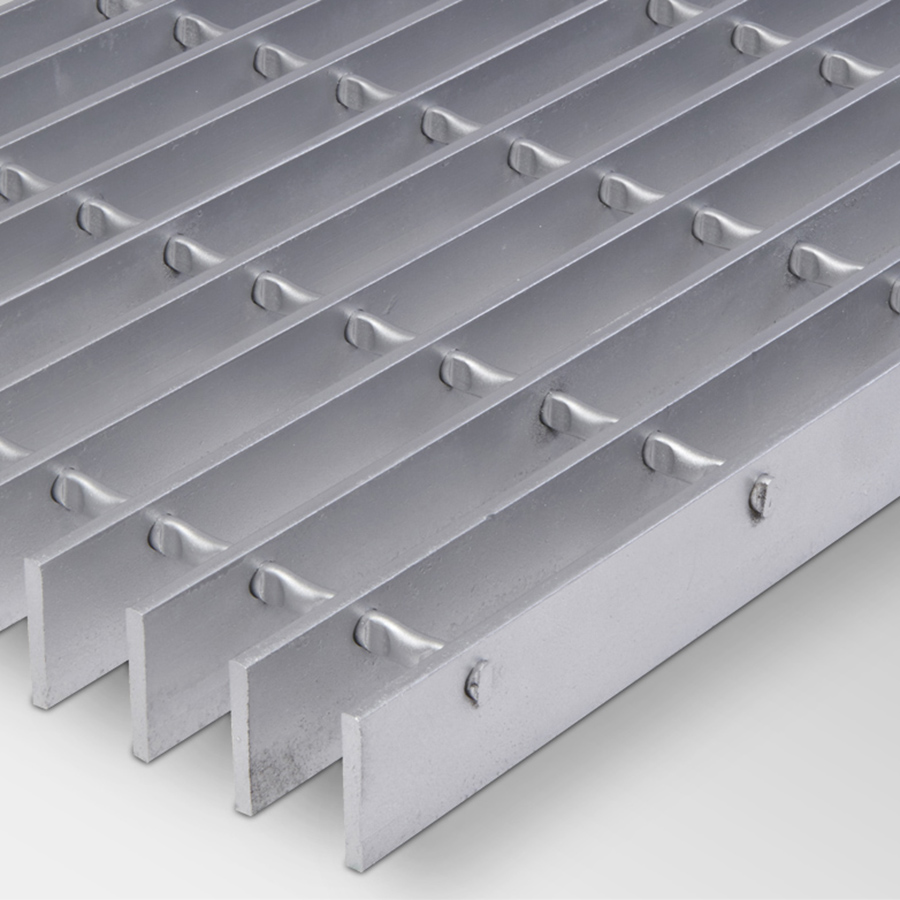
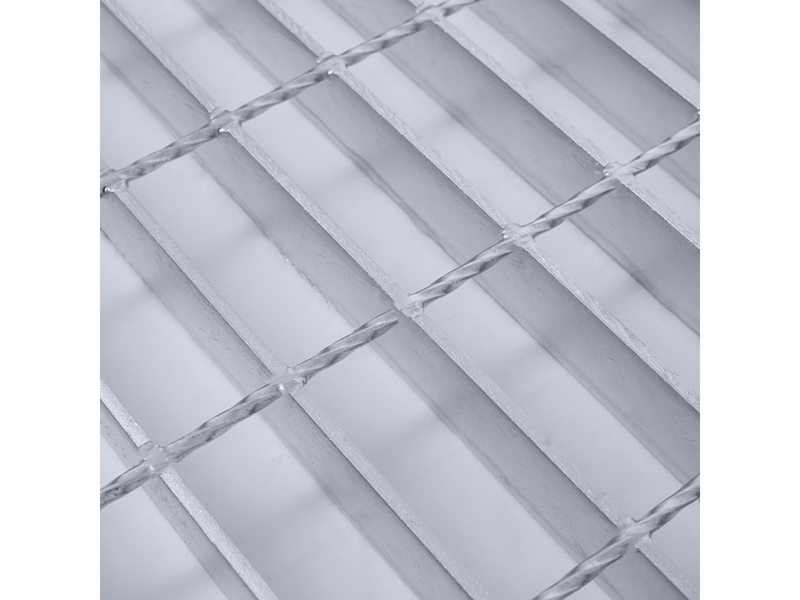
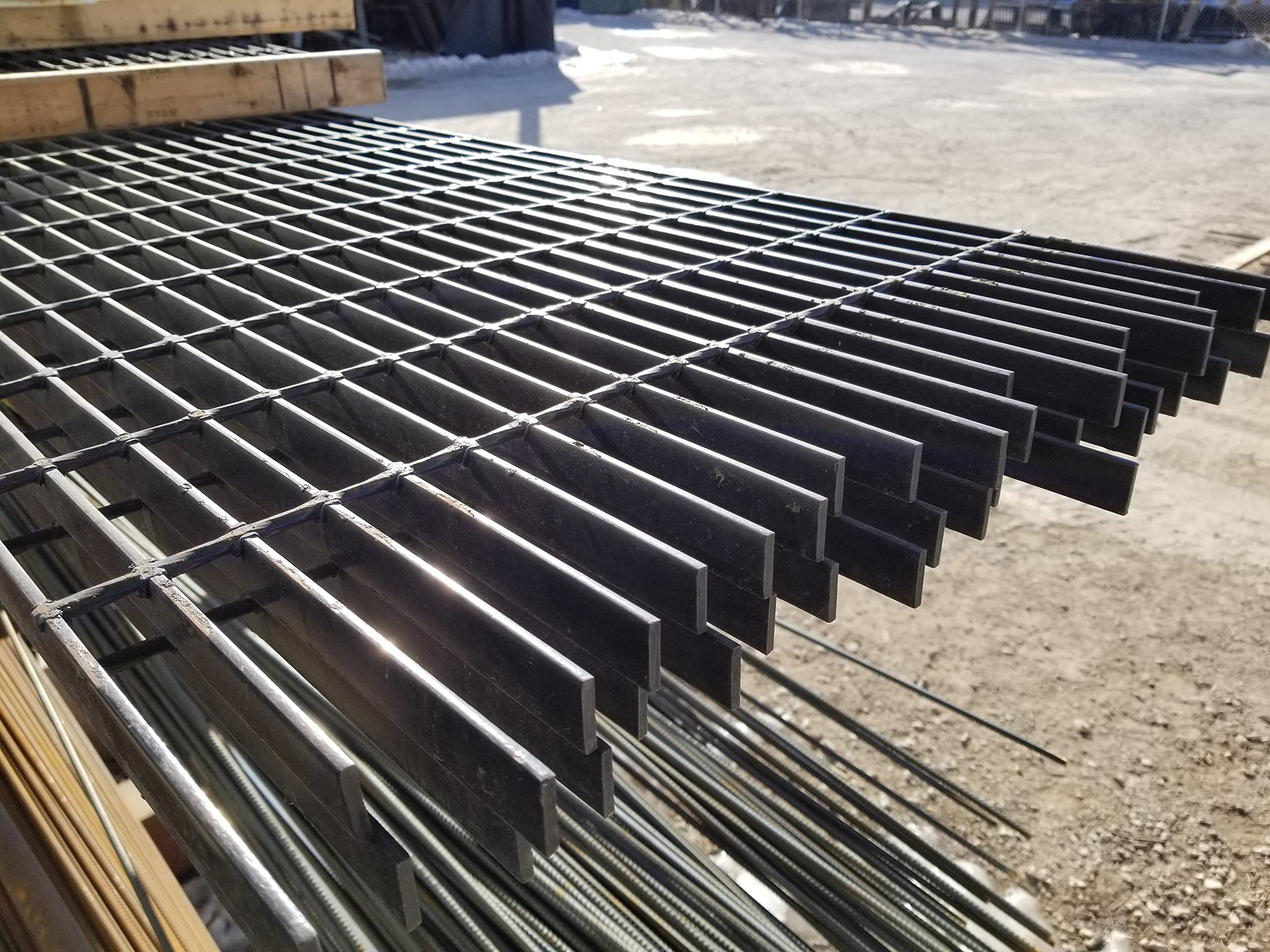
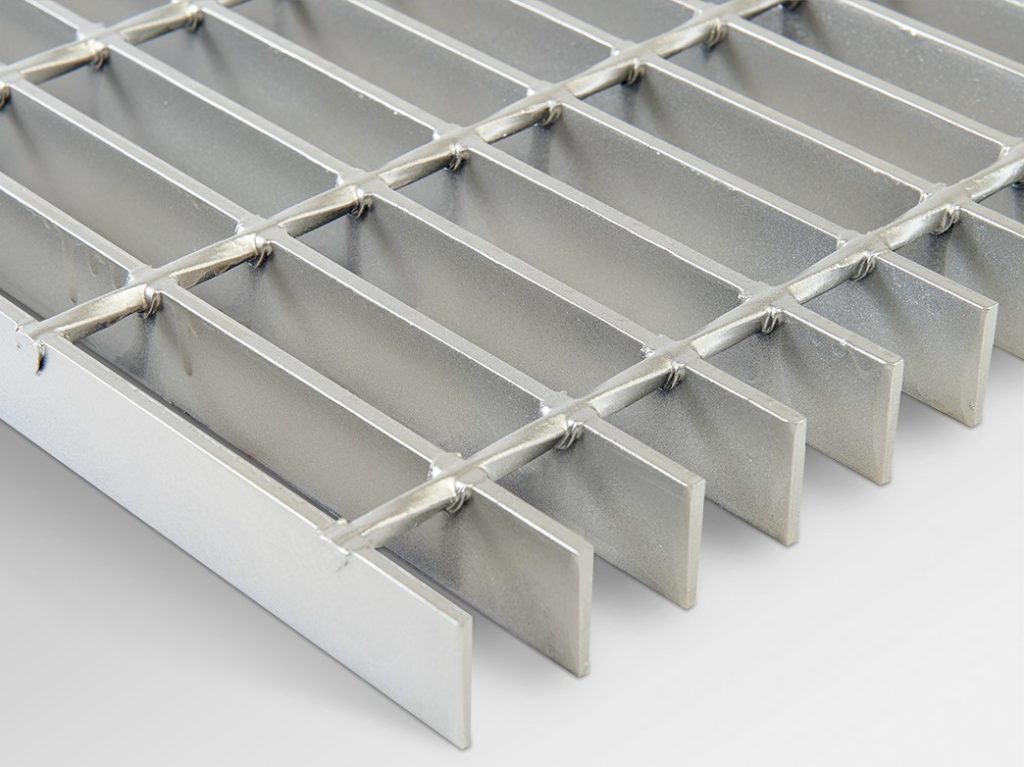
Bar grating is a fabricated grid of parallel load-bearing bars (called bearing bars) connected by perpendicular cross bars or rods. The open-grid design allows light, air, water, and small debris to pass through while providing a strong, slip-resistant walking or working surface. It is one of the most widely used industrial flooring and platform solutions across construction, manufacturing, mining, oil and gas, and commercial infrastructure.
Key Components of Bar Grating
Every bar grating panel consists of two primary structural elements:
- Bearing bars — The main load-carrying members that run the length of the panel. They are typically rectangular in cross-section and are available in various depths (heights) and thicknesses. Common depths range from 1" (25 mm) to 2-1/2" (65 mm) or more for heavy-duty applications.
- Cross bars — The transverse members that lock the bearing bars together and distribute lateral loads. Depending on the grating type, cross bars can be round, square, or twisted square rods.
Common Materials Used
Bar grating is manufactured from several materials to suit different environments:
- Carbon steel — Most common; often hot-dip galvanized for corrosion resistance. Suitable for general industrial flooring.
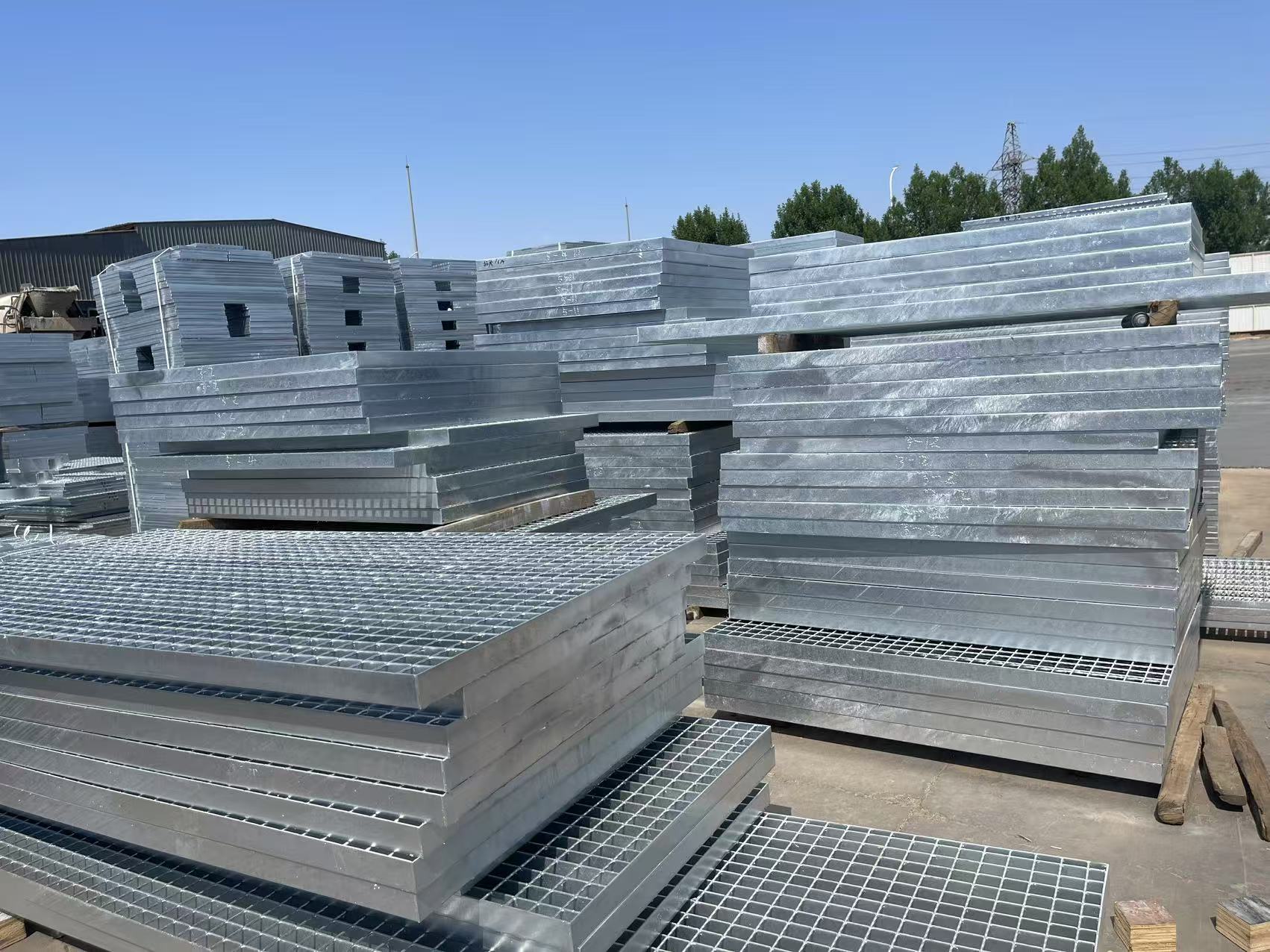
- Galvanized steel — Carbon steel with a zinc coating; the standard choice for outdoor and wet environments.
- Stainless steel — Excellent corrosion resistance for food processing, marine, chemical, and sanitary applications.
- Aluminum — Lightweight and corrosion-resistant; ideal for platforms, catwalks, and architectural applications where weight is a concern.
The choice of material directly affects load capacity, durability, weight, and cost — all of which we will cover in the selection guide later in this article.
Types of Bar Grating
The manufacturing method determines how bearing bars and cross bars are joined, which directly affects strength, appearance, and cost. Here are the most common types of bar grating available:
Welded Bar Grating
Welded bar grating is the most popular and widely used type. Bearing bars and cross bars are resistance-welded at every intersection, creating a monolithic panel with exceptional strength. The welding process fuses the metal at each joint, making it suitable for heavy loads and continuous vibration.
- Advantages: Highest strength-to-weight ratio; excellent for heavy industrial use; rigidity under load; available in carbon steel, stainless steel, and galvanized finishes.
- Common applications: Industrial flooring, platforms, walkways, mezzanines, trench covers, and machine platforms.
- Typical sizes: Bearing bars from 1" x 1/8" up to 2-1/2" x 1/4"; spacing from 1-3/16" on center.
Press Locked Bar Grating
Press locked bar grating (also called pressure-locked grating) uses a mechanical cold-pressing process to join bearing bars and cross bars. No welding or heat is involved — the cross bars are forced into precision-cut notches on the bearing bars, creating a permanent interference fit.
- Advantages: Smooth surface (no weld protrusions); ideal for architectural applications; suitable for light to medium loads; available in aluminum for lightweight installations.
- Common applications: Architectural sunshades, decorative screening, light-duty walkways, mezzanine flooring, and OEM equipment platforms.
- Typical sizes: Lighter bearing bar profiles than welded; often used where appearance matters as much as function.
Serrated Bar Grating
Serrated bar grating features bearing bars with a serrated (toothed) surface on the top edge. These serrations provide superior slip resistance compared to smooth (plain) bearing bars, making it the preferred choice for safety-critical environments.
- Advantages: Maximum slip resistance (exceeds OSHA and ADA requirements); serrations run the full length of the bar; available in both welded and press-locked configurations.
- Common applications: Oil rig platforms, refinery walkways, wet processing areas, inclined walkways, and anywhere slip hazards exist.
- Typical sizes: Same size range as welded bar grating; serrated top adds anti-slip performance without reducing structural capacity.
Other Bar Grating Types
Swage-locked grating uses a mechanical swaging process where cross bars are expanded into dovetail slots. Heavy duty bar grating uses thicker bearing bars (up to 3/8" or more) for extreme load applications like truck wash racks and mining platforms. Aluminum bar grating is commonly manufactured using the swage-locked or press-locked method due to aluminum's lower weldability.
Bar Grating Standard Sizes & Designations
Bar grating sizes are specified by a standard alphanumeric code that describes the bearing bar dimensions, spacing, and material. Understanding these designations is essential for ordering the correct product and comparing options from different suppliers.
Understanding Bar Grating Size Codes
The most common designation system follows the pattern [Bearing Bar Depth]W[Bearing Bar Thickness] — [Spacing]. For example:
- 19W4 — Bearing bars 1-1/2" (19/16" nominal) deep x 3/16" (4/16") thick, typically with 1-3/16" center spacing. This is one of the most popular bar grating sizes for general industrial flooring.
- 15W3 — Bearing bars 1-1/4" deep x 3/16" thick. Used for lighter-duty applications where reduced weight is beneficial.
- 22W4 — Bearing bars 1-3/4" deep x 3/16" thick. Provides higher load capacity for medium-span applications.
- 25W4 — Bearing bars 2" deep x 3/16" thick. Suitable for longer spans and heavier loads.
European and international specifications often use metric designations. For example, G325/30/100 refers to bearing bars 32.5 mm high (G325) with 30 mm spacing between bar centers and 100 mm cross bar spacing. Other common metric sizes include G255/30/100 and G405/30/100.
Standard Panel Dimensions
Most bar grating panels are manufactured in standard widths of 3' or 4' (or 1 m metric) with custom lengths up to 20' or more. Typical stock sizes include:
| Designation | Bar Depth | Bar Thickness | Clear Span (Max) | Typical Use |
|---|---|---|---|---|
| 15W3 | 1-1/4" | 3/16" | 2' - 3' | Light walkways |
| 19W4 | 1-1/2" | 3/16" | 3' - 5' | General industrial |
| 22W4 | 1-3/4" | 3/16" | 4' - 6' | Medium-duty platforms |
| 25W4 | 2" | 3/16" | 5' - 7' | Heavy-duty walkways |
| G325/30/100 | 32.5 mm | 5 mm | 1.0 m - 1.5 m | Standard industrial (metric) |
The "W" designation indicates the bar thickness in 1/16" increments. So W4 = 4/16" = 1/4" thickness. Some suppliers use "G" (grating) followed by the bar depth. Always verify the exact dimensions with your bar grating supplier, as naming conventions can vary between manufacturers.
Bar Grating Load Capacity & Span Tables
Load capacity is the most critical factor when specifying bar grating. The maximum safe load depends on the bearing bar size, material grade, span length, and the spacing between bars. Manufacturers provide bar grating load tables and span tables to help engineers and specifiers select the correct configuration.
How to Read a Load Table
A typical bar grating load table lists the bearing bar size, span length, maximum allowable uniformly distributed load (UDL), and deflection at that load. The values are calculated based on the section modulus of the bearing bars and the yield strength of the material.
| Size | Span (ft) | Load (psf) | Deflection (in) | Load (psf) | Deflection (in) |
|---|---|---|---|---|---|
| 19W4 | 3 | 600 | 0.08 | 1000 | 0.13 |
| 19W4 | 4 | 450 | 0.15 | 750 | 0.24 |
| 19W4 | 5 | 288 | 0.26 | 480 | 0.42 |
| 22W4 | 4 | 570 | 0.12 | 950 | 0.20 |
| 22W4 | 5 | 365 | 0.20 | 608 | 0.32 |
| 25W4 | 5 | 445 | 0.16 | 740 | 0.26 |
| 25W4 | 6 | 309 | 0.26 | 515 | 0.42 |
Note: Values shown are representative examples. Always refer to the manufacturer's certified steel grating load capacity chart for your specific product.
Deflection Limits
Industry standards (per ANSI/NAAMM MBG 531) recommend a maximum deflection of L/200 for bar grating under design load, where L is the clear span. For example, a 4-foot span (48 inches) should not deflect more than 48/200 = 0.24 inches under full load. Some applications, such as walkways for pedestrian traffic, may require stricter limits of L/300 or even L/400.
Key factors that affect load capacity:
- Bearing bar depth — Deeper bars carry significantly more load. Doubling the depth increases the section modulus by approximately four times.
- Bearing bar thickness — Thicker bars add strength but also weight and cost.
- Bar spacing — Closer spacing (e.g., 7/16" vs. 1-3/16") distributes loads across more bars, increasing overall panel capacity.
- Span length — Longer spans reduce load capacity exponentially (span2 relationship).
- Material grade — Higher yield strength materials (e.g., stainless steel 316 vs. carbon steel) support greater loads.
Always consult the manufacturer's bar grating span tables and verify that the chosen configuration meets your required safety factor — typically 1.5 to 2.0 for industrial applications.
Material Selection Guide for Bar Grating
Choosing the right material is a balance between strength, corrosion resistance, weight, cost, and the operating environment. Here is a detailed comparison of the most common bar grating materials.
Steel Bar Grating
Steel bar grating is the workhorse of the industry. Made from carbon steel (typically ASTM A36 or A1011), it offers the highest strength at the lowest material cost. Most steel bar grating is hot-dip galvanized after fabrication to provide corrosion resistance, though it can also be left black (mill finish) for indoor use.
- Yield strength: 36,000 psi (carbon steel)
- Best for: Industrial flooring, platforms, walkways, mezzanines, plant access
- Cost: Lowest-cost material option
- Corrosion resistance: Poor without coating; excellent with hot-dip galvanizing
- Weight: Approximately 4.5 - 8.0 lbs/ft2 depending on bar size
Aluminum Bar Grating
Aluminum bar grating (typically 6061-T6 alloy) is approximately one-third the weight of steel with natural corrosion resistance. It does not rust, making it ideal for outdoor, marine, food processing, and architectural applications where weight reduction is important.
- Yield strength: 35,000 psi (6061-T6)
- Best for: Marine environments, food plants, architectural facades, lightweight platforms
- Cost: 2-3x more than carbon steel
- Corrosion resistance: Excellent (natural oxide layer)
- Weight: Approximately 1.5 - 3.0 lbs/ft2
Heavy Duty Bar Grating Options
Heavy duty bar grating uses thicker and deeper bearing bars than standard grating, typically with bar thicknesses of 1/4" (W4) to 3/8" (W6) and depths up to 6" or more. It is designed for extreme load conditions such as truck wash racks, mining platforms, crane rails, and industrial mezzanines supporting heavy machinery.
- Yield strength: 36,000 - 50,000 psi depending on steel grade
- Best for: Vehicle traffic areas, heavy equipment platforms, mining, steel mills
- Cost: Higher than standard steel bar grating due to increased material weight
- Design considerations: Require deeper bearing bars (2" to 6") and closer bar spacing; often specified with 1-3/16" or 7/16" spacing for maximum load distribution
For most general-purpose industrial applications, 19W4 steel bar grating (1-1/2" x 3/16") offers the best balance of strength, weight, and cost. For corrosive environments where weight matters, aluminum bar grating is an excellent alternative. For extreme loading, heavy duty bar grating is engineered to meet the demand.
How to Choose the Right Bar Grating for Your Project
With the information above, you can now systematically evaluate your requirements and select the optimal bar grating configuration. Follow this step-by-step process:
- Determine the application and environment — Is it indoor or outdoor? Will it be exposed to chemicals, moisture, or extreme temperatures? This decides the material (steel, galvanized, stainless, or aluminum).
- Calculate the design load — Identify the maximum uniformly distributed load (UDL) and any concentrated loads. Include the weight of personnel, equipment, stored materials, and a safety factor (typically 1.5x to 2x the expected load).
- Measure the clear span — The distance between supporting members determines the required bearing bar depth. Longer spans need deeper bars. Refer to the bar grating span tables to find configurations that meet your load and deflection requirements.
- Select the bar spacing — Standard 1-3/16" spacing is suitable for most industrial walkways. Use 7/16" or 15/16" spacing for applications where smaller objects could fall through, such as tool drops or high-heel traffic.
- Choose the grating type — Welded bar grating for strength, press locked bar grating for smooth surfaces and architectural uses, serrated bar grating where slip resistance is critical.
- Pick the surface treatment — Mill finish (indoor), hot-dip galvanized (outdoor/wet), or epoxy/paint (specialized environments).
- Consider bar grating near me vs. online suppliers — Local suppliers offer faster delivery and lower freight costs for smaller quantities. Online and global manufacturers (especially from China) provide competitive pricing for volume orders. Major manufacturers like IKG, McNichols, Webforge, Ohio Gratings, and Sino Grating offer comprehensive bar grating catalog downloads with load tables.
Always request a certified steel grating load capacity chart or bar grating load tables from your supplier to verify the selected configuration meets your project's structural requirements. Many manufacturers provide online calculators where you can input span, load, and bar size to check compliance.
Conclusion
Bar grating is a versatile, cost-effective, and reliable solution for industrial flooring, walkways, platforms, and countless other applications. By understanding the differences between welded bar grating, press locked bar grating, and serrated bar grating, you can select the type that best matches your strength and safety requirements.
Remember these key takeaways:
- Bar grating sizes like 19W4, 22W4, and G325/30/100 define bearing bar dimensions — always verify with your supplier.
- Load capacity depends on bar depth, thickness, span, and material. Always use certified bar grating load tables for design decisions.
- Steel bar grating offers the best strength-to-cost ratio. Aluminum bar grating is ideal when weight or corrosion resistance is paramount.
- Heavy duty bar grating is engineered for extreme loads like vehicle traffic and heavy machinery.
- For slip-critical environments, serrated bar grating provides the highest level of anti-slip protection.
Whether you are sourcing bar grating near me for a quick project or ordering in bulk from an international manufacturer, having a solid understanding of types, sizes, and load capacities will ensure you get the right product for the job. Use this guide as your reference whenever you specify bar grating — and always consult your supplier's engineering data for final design verification.