Introduction
Hot-dip galvanized steel grating is one of the most widely used industrial flooring solutions in the world, prized for its exceptional corrosion resistance, structural strength, and long service life. When carbon steel grating is immersed in molten zinc through the hot-dip galvanizing (HDG) process, it forms a metallurgical bond that delivers decades of protection — even in harsh environments. This article serves as a complete galvanized steel grating guide, covering the HDG coating process per ASTM A123, expected durability of 20 to 50 years, cost comparisons with stainless steel, typical applications, pricing factors, installation methods, and how to evaluate galvanized steel grating suppliers. Whether you are procuring grating for an industrial platform, a walkway, or a drainage project, understanding the HDG coating is essential to maximizing your return on investment.
What Is Galvanized Steel Grating?
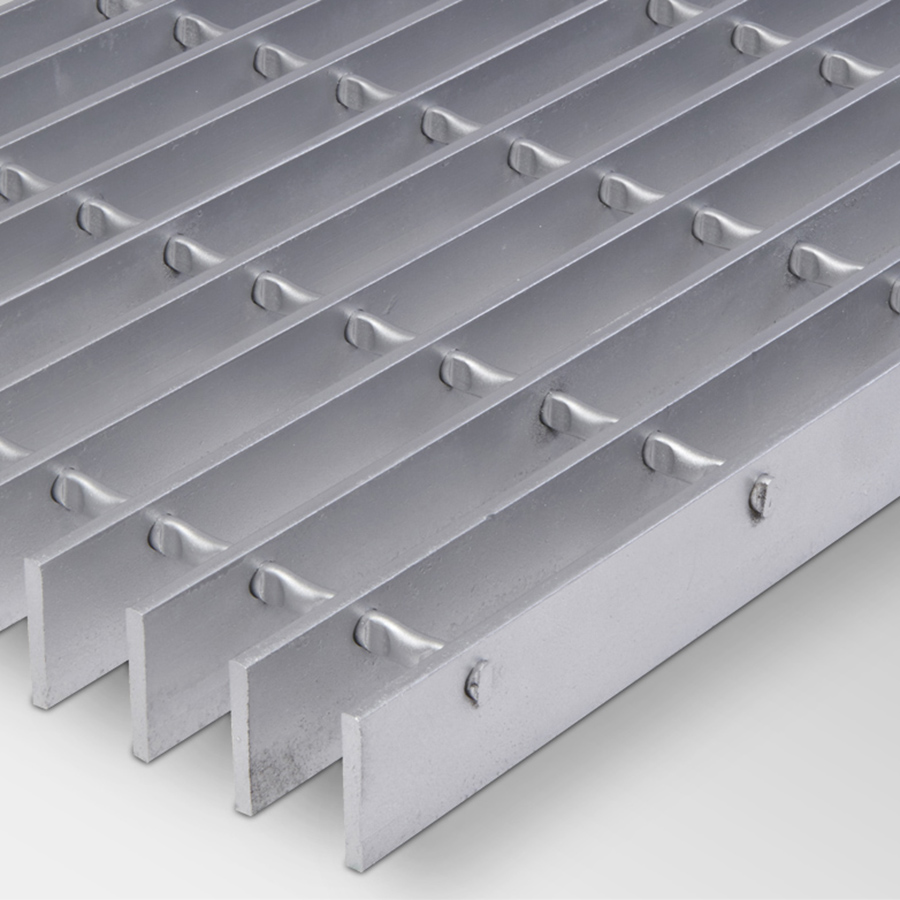
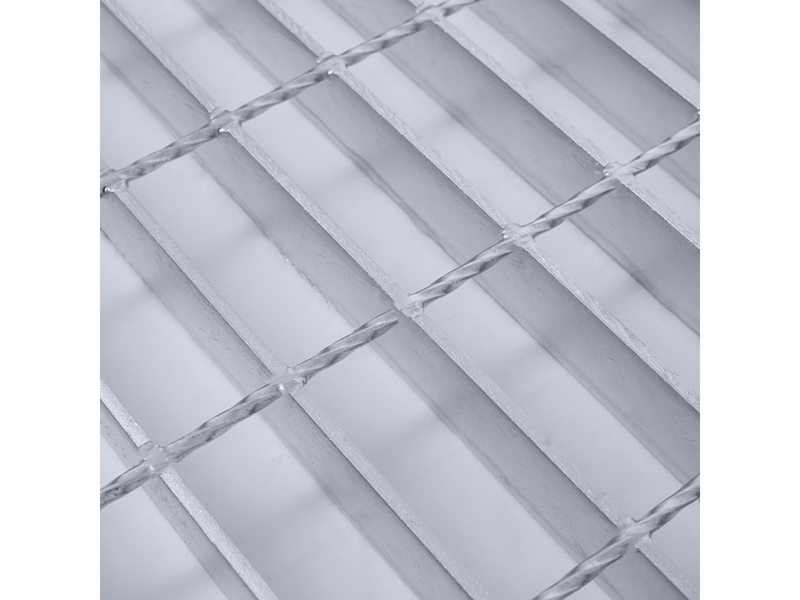
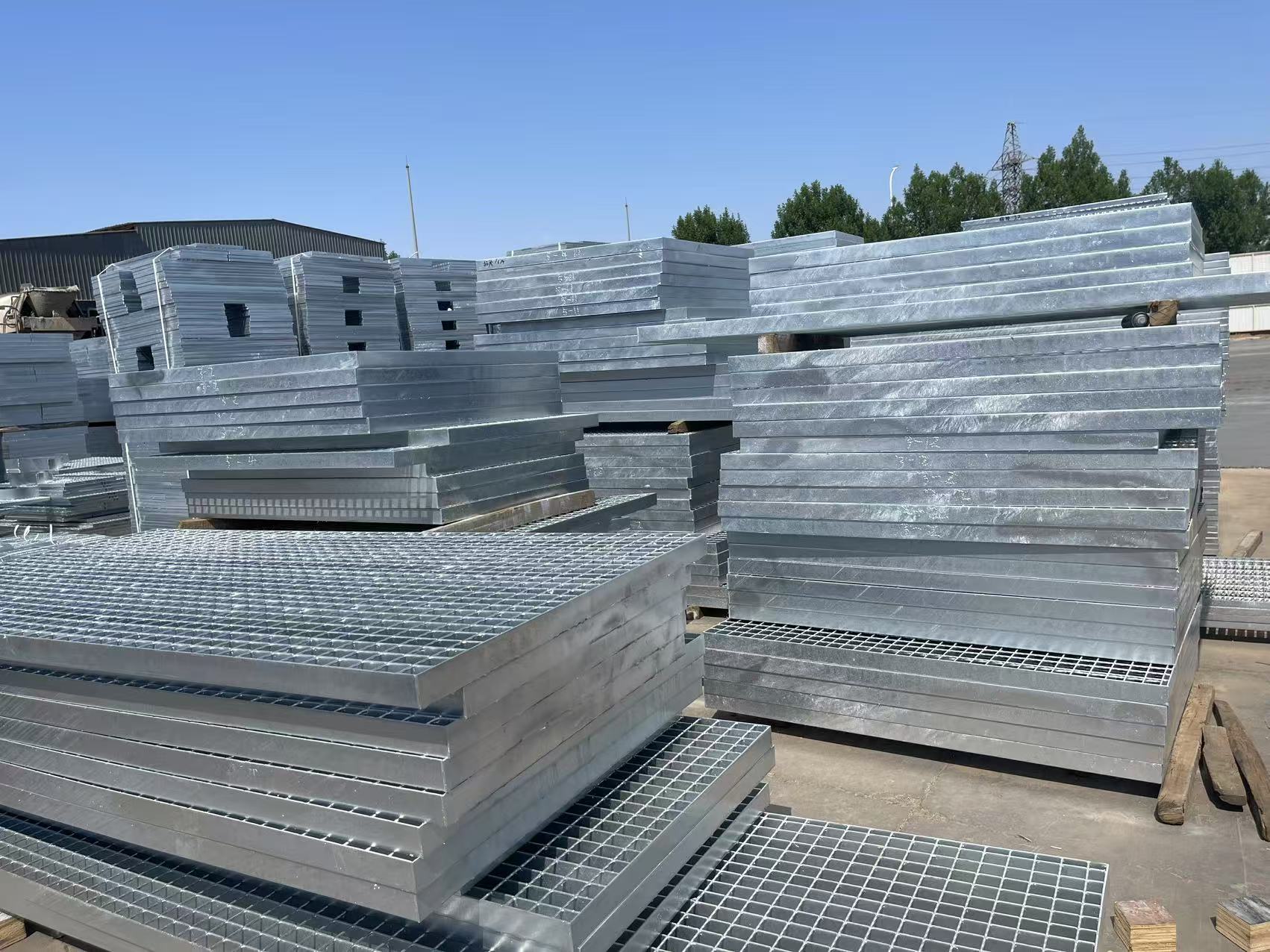
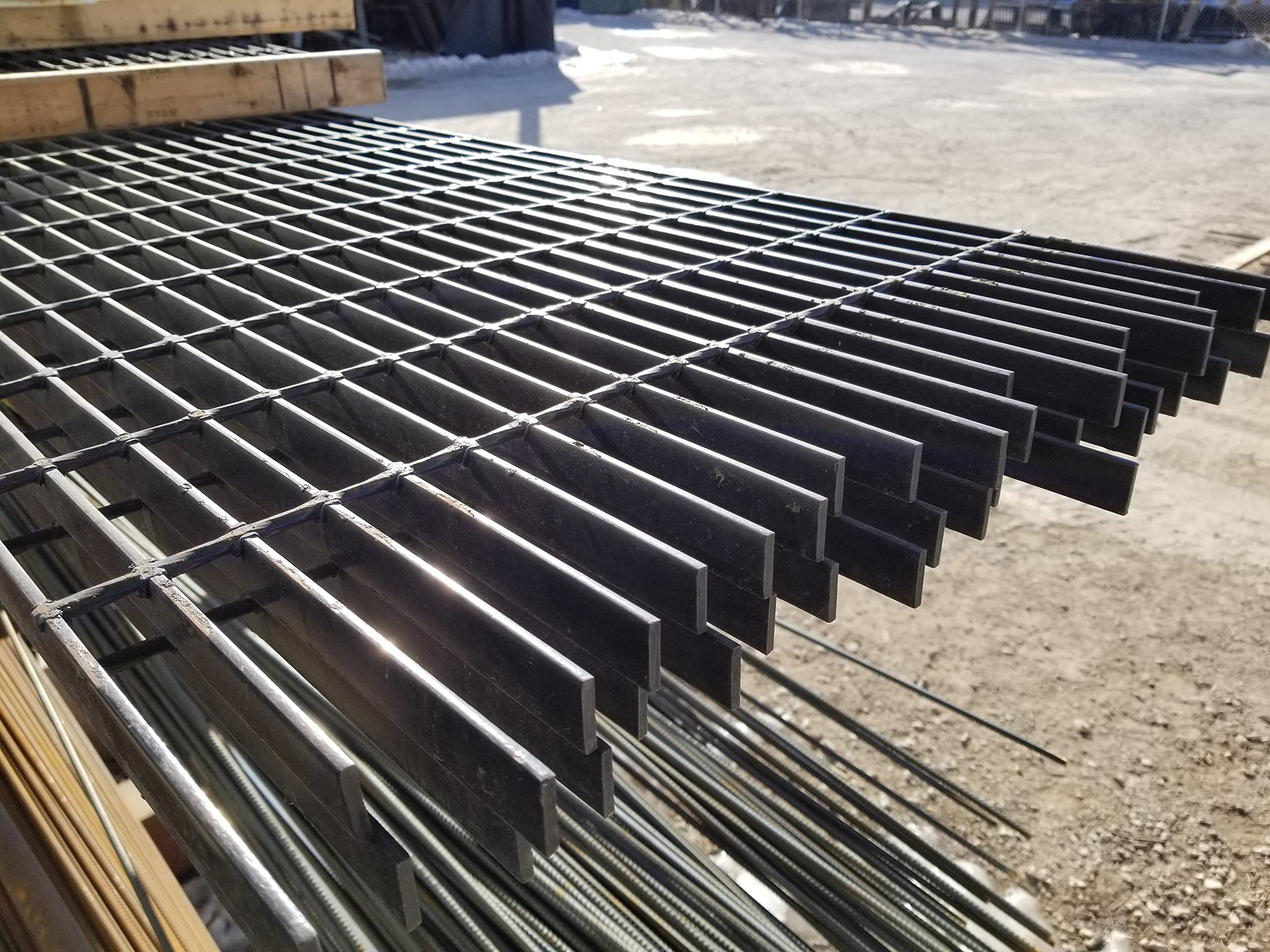
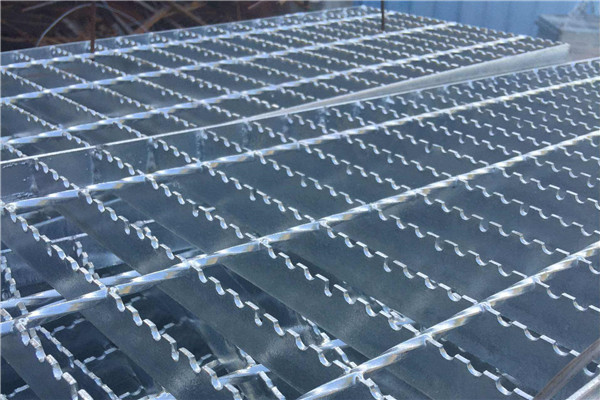
Galvanized steel grating is a fabricated grid structure made from load-bearing bars (typically flat steel bars) and cross bars that are welded or press-locked at right angles to form open panels. What distinguishes galvanized grating from plain steel grating is the protective zinc coating applied through the hot-dip galvanizing process. The result is a product that combines the mechanical strength of steel with the corrosion resistance of zinc, making it suitable for outdoor and wet environments where uncoated steel would rapidly deteriorate.
Composition and Standard Configurations
Most galvanized steel grating is manufactured from mild carbon steel per ASTM A36 or equivalent standards. The bearing bars run in the load-carrying direction, while cross bars (typically twisted or round) provide lateral stability. Common spacing configurations include 30×100 mm, 40×100 mm, and 50×50 mm center-to-center. After fabrication, the entire panel is hot-dip galvanized, meaning every surface — including internal edges and weld zones — receives full zinc coverage.
How Galvanized Steel Grating Is Manufactured
The manufacturing process begins with cutting steel flat bars to length, followed by punching or welding cross bars at precise intervals. For welded grating, resistance welding fuses each cross bar to every bearing bar intersection, creating a monolithic panel. For press-locked grating, cross bars are forced into pre-punched slots under extreme hydraulic pressure without welding. Once the bare steel panel is fabricated, it undergoes hot-dip galvanizing: the panel is chemically cleaned, fluxed, immersed in molten zinc at approximately 450 °C (840 °F), and then withdrawn to allow excess zinc to drain. This process creates a series of zinc-iron alloy layers that are metallurgically bonded to the steel substrate, far more durable than any paint or powder coating.

The Hot-Dip Galvanizing (HDG) Process Under ASTM A123
The hot-dip galvanizing (HDG) process is defined by ASTM A123, the standard specification for zinc (hot-dip galvanized) coatings on iron and steel products. For galvanized steel grating, ASTM A123 sets the minimum coating thickness requirements, the acceptable surface condition, and the testing methods to verify coating quality. Understanding this process is critical for engineers and procurement professionals who rely on the long-term performance of their grating installations.
Surface Preparation — Cleaning and Fluxing
Before any steel grating panel can be galvanized, its surface must be meticulously prepared. The panel first undergoes degreasing in a hot alkaline solution to remove oil, grease, and shop dirt. It is then rinsed and pickled in a dilute hydrochloric or sulfuric acid bath to remove mill scale and rust. A second rinse removes residual acid, after which the panel is immersed in a flux solution — typically a mixture of zinc ammonium chloride. The flux acts as a cleaning agent that prevents oxidation before galvanizing and promotes the formation of a uniform zinc-iron alloy layer. This three-step preparation (clean, pickle, flux) is non-negotiable for achieving a quality HDG coating that meets ASTM A123 requirements.
The Galvanizing Bath — Metallurgical Bonding
The prepared steel grating panel is lowered into a kettle of molten zinc maintained at approximately 450 °C (840 °F). The steel reacts with the molten zinc to form a series of distinct zinc-iron intermetallic layers: the Gamma layer (closest to the steel), the Delta layer, the Zeta layer, and finally the Eta layer of nearly pure zinc on the outer surface. This metallurgical bond is what differentiates hot-dip galvanizing from other coating methods — it is not merely a surface adhesion but a true alloying reaction. The panel remains immersed until it reaches the bath temperature (typically 3 to 5 minutes), then is withdrawn at a controlled rate to allow excess zinc to drain, producing the characteristic bright, spangled finish.

Post-Galvanizing Inspection and Quality Control
After galvanizing, each grating panel is inspected per ASTM A123 requirements. The coating thickness is measured using magnetic gauges on multiple locations of the bearing bars and cross bars. ASTM A123 specifies minimum average coating thickness based on the steel thickness category: for steel grating with bearing bars 3/16 inch (4.76 mm) to less than 1/4 inch (6.35 mm) thick, the minimum average coating thickness is 3.9 mils (100 microns). Thicker steel sections receive proportionally thicker coatings. Additional quality checks include visual inspection for uncoated areas, drips, or sharp edges that could compromise performance. The coating must be continuous, smooth, and free from blisters, flux inclusions, or bare spots.
Galvanized Coating Thickness and Expected Lifespan
One of the most frequently asked questions about galvanized steel grating is how long it will last. The answer depends on coating thickness and the environmental exposure conditions, but in typical industrial settings, a properly applied HDG coating delivers 20 to 50 years of maintenance-free service.
Minimum Coating Thickness per ASTM A123
ASTM A123/B6 establishes the minimum coating thickness based on the category of steel being galvanized. For steel grating, the bearing bar thickness determines the coating class:
| Steel Thickness Category | Thickness Range | Min. Avg. Coating (mils) | Min. Avg. Coating (µm) |
|---|---|---|---|
| 1/8" to < 3/16" | 3.18 – 4.76 mm | 3.0 | 75 |
| 3/16" to < 1/4" | 4.76 – 6.35 mm | 3.9 | 100 |
| 1/4" to < 5/8" | 6.35 – 15.88 mm | 4.7 | 120 |
| 5/8" and over | ≥ 15.88 mm | 5.0 | 127 |
Most standard welded grating uses bearing bars in the 1/4" to 5/8" range, giving a minimum average coating of 4.7 mils (120 µm).
Service Life: Why 20–50 Years Is Realistic
The corrosion rate of zinc in typical industrial atmospheres is approximately 0.1 to 0.5 µm per year for indoor or rural environments, and 1 to 3 µm per year in moderate industrial or coastal conditions. With a 120 µm coating, this translates to a service life of 40 to 100+ years in mild environments and 20 to 40 years in aggressive industrial settings. The zinc coating sacrifices itself preferentially to protect the underlying steel — a cathodic protection mechanism that even protects exposed cut edges and small scratches that inevitably occur during handling and installation.
Does Galvanized Steel Grating Rust Over Time?
Yes — but not in the way uncoated steel does. The zinc coating corrodes preferentially, forming a protective patina of zinc carbonate that slows further corrosion. Over many years, as the zinc layer is gradually consumed, the underlying steel may eventually be exposed in localized areas. However, because the zinc-iron alloy layers (particularly the Delta and Gamma layers) are harder and more corrosion-resistant than pure zinc, the effective protection extends well beyond what the outer zinc layer alone would suggest. In practice, most galvanized steel grating walkway installations remain structurally sound for 20 to 40 years before any significant rust appears, and even then, the corrosion is typically superficial and localized rather than structurally compromising.
Galvanized Steel Grating vs Stainless Steel: Cost-Benefit Analysis
One of the most common procurement decisions in industrial grating is whether to specify galvanized steel grating or stainless steel grating. Both offer excellent corrosion resistance, but they differ significantly in upfront cost, total cost of ownership, and suitability for specific environments.
Upfront Material Cost Comparison
On a per-square-foot basis, galvanized steel grating is substantially more affordable than stainless steel grating. A typical welded galvanized steel grating panel (1" x 3/16" bearing bars, 2" cross bar spacing) costs approximately 40–60% less than the equivalent 304 stainless steel grating panel. The price gap widens further for 316 stainless steel, which can cost 2.5 to 3 times more than galvanized. This cost advantage makes galvanized steel grating the preferred choice for large-scale industrial projects where thousands of square feet of grating are needed — such as refinery platforms, power plant walkways, and water treatment facilities.
| Material | Relative Cost Factor | Corrosion Resistance | Typical Service Life |
|---|---|---|---|
| Galvanized Steel (HDG) | 1.0x (baseline) | Excellent (mild-moderate) | 20–50 years |
| 304 Stainless Steel | 2.0–2.5x | Superior (most environments) | 50+ years |
| 316 Stainless Steel | 2.5–3.0x | Exceptional (marine/chemical) | 50+ years |
Total Cost of Ownership in B2B Applications
While stainless steel offers longer theoretical service life in aggressive environments, the total cost of ownership (TCO) calculation depends heavily on the specific application. For indoor or moderately corrosive outdoor environments, galvanized steel grating delivers the lowest TCO because its upfront cost is dramatically lower and its service life (20–50 years) exceeds the typical design life of most industrial facilities. Only in environments with sustained exposure to chlorides, strong acids, or high temperatures above 200 °C does stainless steel — particularly 316 grade — justify its premium price. For many B2B buyers, the practical question is not "which lasts longer" but "which provides adequate service life at the lowest cost." In most cases, galvanized steel grating is the economically optimal answer.
Where Is Galvanized Steel Grating Commonly Used?
Galvanized steel grating is used across virtually every industrial sector because it combines high load capacity with excellent corrosion resistance. The HDG coating makes it particularly well-suited for outdoor and wet environments where uncoated steel would quickly fail. Below are the most common application categories.
Industrial Walkways and Platform Flooring
The most widespread use of galvanized steel grating is for walkways and platform flooring in industrial facilities. The open-grid design allows light, air, and water to pass through, reducing wind uplift on elevated structures and preventing water accumulation. The slip-resistant surface — often enhanced by serrated bearing bars — provides safe footing even in wet or oily conditions. Typical installations include catwalks in manufacturing plants, mezzanine flooring in warehouses, access platforms around processing equipment, and elevated walkways in power generation facilities. For these applications, galvanized steel grating walkway panels in standard sizes (e.g., 3 ft x 20 ft) are readily available from most galvanized steel grating suppliers.

Drainage and Trench Covers
Galvanized steel grating is extensively used for trench covers, drainage channels, and floor drains in municipal, commercial, and industrial settings. The high open area (typically 60–70%) allows rapid water flow while supporting pedestrian and vehicular loads. Heavy-duty galvanized grating panels can handle H-20 truck loading (16,000 lbs per wheel) and are commonly specified for roadway trenches, airport tarmac drains, and loading dock drainage systems. The HDG coating ensures that these drainage gratings resist corrosion from road salts, standing water, and chemical runoff.
Chemical and Marine Environments
In chemical processing plants, refineries, and wastewater treatment facilities, galvanized steel grating provides reliable corrosion protection against a wide range of chemicals. The zinc coating resists attack from alkaline solutions, many solvents, and atmospheric chemicals common in industrial environments. For marine and coastal installations, the HDG coating provides good protection against salt spray, though in severe splash-zone applications, 316 stainless steel may be specified for critical safety areas. Food processing plants also commonly use galvanized grating for mezzanines and platforms where wash-down procedures are frequent.
Galvanized Steel Grating Price — Key Factors
Understanding the factors that determine galvanized steel grating price helps procurement professionals budget accurately and make cost-effective purchasing decisions. While prices fluctuate with steel and zinc commodity markets, several structural factors remain consistent.
Key Price Determinants
- Bearing bar size and spacing: Thicker bars (e.g., 1/4" vs. 3/16") and tighter spacing (e.g., 1" centers vs. 2" centers) increase steel weight and cost proportionally.
- Panel dimensions: Custom panel sizes require more fabrication labor and may incur waste, while standard sizes benefit from economies of scale.
- Serrated vs. plain surface: Serrated bearing bars add a manufacturing step and typically increase price by 10-15%.
- Steel price index: Carbon steel prices directly affect the base cost of the grating blank before galvanizing.
- Zinc price: Zinc represents a significant portion of the HDG cost; when LME zinc prices rise, expect corresponding increases in galvanized steel grating price.
- Order volume: Bulk orders (500+ sq ft) typically receive 5-15% discounts compared to small quantities.
Galvanized Steel Grating Price per Square Foot
As a general benchmark for B2B buyers in North America and Europe, standard welded galvanized steel grating (1" x 3/16" bearing bars on 2" centers, 30" x 20 ft panels) typically ranges from USD 8 to USD 15 per square foot as of 2026 pricing. Heavier-duty configurations with 1/4" bearing bars on 1" centers can range from USD 15 to USD 25 per square foot. These prices include the hot-dip galvanizing per ASTM A123. For the most current pricing, it is recommended to request quotes from multiple galvanized steel grating suppliers, as regional market conditions, transportation costs, and delivery timelines can vary significantly.
For international buyers, the galvanized steel grating price for standard galvanized panels sourced from major manufacturing hubs (such as China or India) is often 30-50% lower than domestic US or European pricing, though shipping and import duties must be factored into the total landed cost. Requesting FOB or CIF quotes from international suppliers allows for accurate comparison.
Galvanized Steel Grating Installation Guide
Proper galvanized steel grating installation is essential to realizing the full service life and load-bearing performance of the panels. While the HDG coating provides excellent corrosion protection, improper installation can damage the coating and create weak points that reduce the overall durability.
Bearing Bar Orientation and Support Structure
Always install galvanized steel grating with the bearing bars running perpendicular to the support beams. The bearing bars carry the design load, and the cross bars provide only lateral stability. Support bearing surfaces should be level, clean, and at least 1 inch wide for proper load distribution. The recommended bearing length is a minimum of 1-1/2 inches (38 mm) on each support. Never cut galvanized grating panels in the field if factory-cut panels can be ordered — cutting exposes raw steel edges that are vulnerable to corrosion. If field cutting is unavoidable, the cut edges must be repaired with a zinc-rich cold galvanizing compound to restore corrosion protection. Following correct galvanized steel grating installation practices ensures the coating remains intact across the entire panel surface.

Fastening and Clamping Systems
Galvanized steel grating should be secured using galvanized or stainless steel fasteners to prevent galvanic corrosion between dissimilar metals. Common fastening methods include:
- J-bolts and hold-down clips: For concrete or steel supports, these provide secure, lift-resistant anchoring. The clip should be galvanized to match the grating.
- Saddle clips: Used for grating on steel beams, saddle clips wrap around the bearing bar and are bolted to the support structure.
- Weld-down tabs: For permanent installations, small weld tabs can be welded to the support beam. After welding, the tab and surrounding area must be repaired with cold galvanizing paint.
- Expanding anchors: For concrete supports, expanding wedge anchors with galvanized finish provide secure fastening.
API RP 2A and OSHA 1910.23 recommend that grating be secured against lateral movement and uplift at every support bearing point. For galvanized steel grating walkway installations, fasteners should be spaced no more than 12 inches apart along the panel edges.
Selecting Galvanized Steel Grating Suppliers
Choosing the right galvanized steel grating suppliers is as important as selecting the right grating specification. The quality of the HDG coating, the dimensional accuracy of the panels, and the supplier's ability to deliver on schedule all directly affect project success. Here are the key criteria to evaluate when qualifying suppliers.
Certifications and Quality Assurance
Reputable galvanized steel grating suppliers should provide certification that their HDG coating meets ASTM A123 standards. Request mill test reports (MTRs) for the base steel and a galvanizing certificate confirming coating thickness measurements. Suppliers that operate in-house galvanizing lines typically offer better quality control because the entire process — from fabrication to coating — is managed under one roof. For projects requiring third-party inspection, confirm that the supplier accepts inspections by agencies such as SGS, Bureau Veritas, or TUV.
Production Capacity and Lead Times
Industrial grating projects often have tight timelines. Evaluate whether the supplier carries standard galvanized grating panels in stock for immediate delivery, or whether all panels must be fabricated to order. Leading suppliers maintain inventories of common sizes (3 ft x 20 ft, 4 ft x 20 ft in popular bar configurations) to support urgent requirements. For custom orders, typical lead times range from 2 to 6 weeks depending on complexity and plant loading.
Experience with Export and International Projects
For B2B buyers sourcing from overseas, look for suppliers with documented experience in export logistics. They should be familiar with packing standards for ocean freight (e.g., steel banded bundles with edge protectors,塑料 wrapping for moisture protection), container loading optimization, and Incoterms such as FOB, CIF, or DAP. Suppliers who have successfully delivered to your region before will understand the documentation requirements (bill of lading, packing list, certificate of origin, and sometimes anti-dumping or tariff classification paperwork).
Total Cost Evaluation
When comparing galvanized steel grating suppliers, do not evaluate on unit price alone. Consider the total landed cost: material price, tooling or setup fees for non-standard sizes, packaging costs, inland transportation to port, ocean freight, insurance, import duties, and final delivery to your site. A supplier offering a slightly lower unit price but higher freight or packaging costs may not deliver the best overall value.
Conclusion
Galvanized steel grating remains the most cost-effective and reliable industrial flooring solution for a vast range of applications, from walkways and platforms to drainage covers and chemical plant flooring. The hot-dip galvanizing process per ASTM A123 delivers a metallurgically bonded zinc coating that provides 20 to 50 years of corrosion protection with minimal maintenance — a service life that no paint system or powder coating can match. When compared to stainless steel, galvanized steel grating offers 40–60% lower upfront cost with adequate corrosion resistance for the majority of industrial environments, making it the economically optimal choice for most B2B projects.
Key takeaways for procurement professionals and engineers:
- Always specify galvanized steel grating that meets ASTM A123 for guaranteed coating thickness and quality.
- For walkway and platform applications, the HDG coating provides superior slip resistance and long-term durability.
- The galvanized steel grating price depends on bearing bar size, spacing, serration, and zinc market conditions — request multiple quotes for competitive comparison.
- Proper galvanized steel grating installation with correct bearing bar orientation and galvanized-compatible fasteners is essential to maximize service life.
- Work with experienced galvanized steel grating suppliers who can document their quality certifications and provide reliable lead times.
Whether you are specifying grating for a new refinery, upgrading walkways in a wastewater plant, or sourcing drainage covers for an infrastructure project, understanding the HDG coating process and its durability characteristics will help you make informed decisions that balance performance, longevity, and cost.