Introduction
When industrial operations demand flooring, walkways, and platforms that can withstand extreme loads — often exceeding 1,000 pounds per square foot — standard grating simply does not suffice. That is where heavy duty steel grating comes in. Engineered with thicker bearing bars, closer spacing, and higher-strength materials, this product category is the backbone of heavy industrial environments ranging from mining facilities and truck wash platforms to steel mills and offshore oil rigs.
This comprehensive guide covers everything engineers, procurement managers, and plant operators need to know: load capacity ratings, bearing bar dimensions, comparison with standard grating, selection criteria, and the most demanding industrial applications. Whether you are designing a new mining platform or upgrading a truck wash bay, this article provides the technical reference you need to specify the right product.
What Is Heavy Duty Steel Grating?
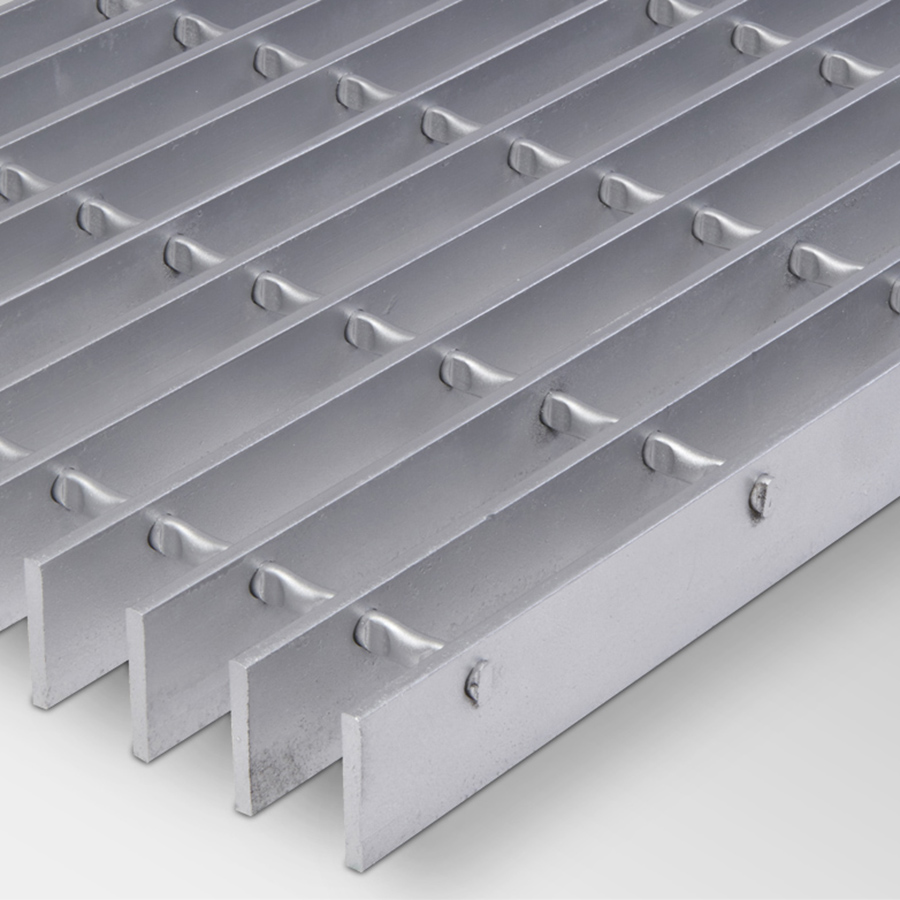
Heavy duty steel grating is a type of industrial flooring and walkway material manufactured with thicker and deeper bearing bars than standard grating, designed specifically to support exceptionally high loads in the most demanding environments. It is typically fabricated from carbon steel (then hot-dip galvanized) or stainless steel, using either welded or press-locked construction methods.
Key Characteristics
- Bearing bar thickness: Typically 6 mm (1/4") to 12 mm (1/2") or more, compared to 3-5 mm for standard profiles
- Bearing bar depth: Ranges from 25 mm (1") up to 100 mm (4") or greater for extreme spans
- Load capacity: Designed for uniform loads of 1,000 psf (48 kN/m²) and above, with some configurations handling 3,000+ psf
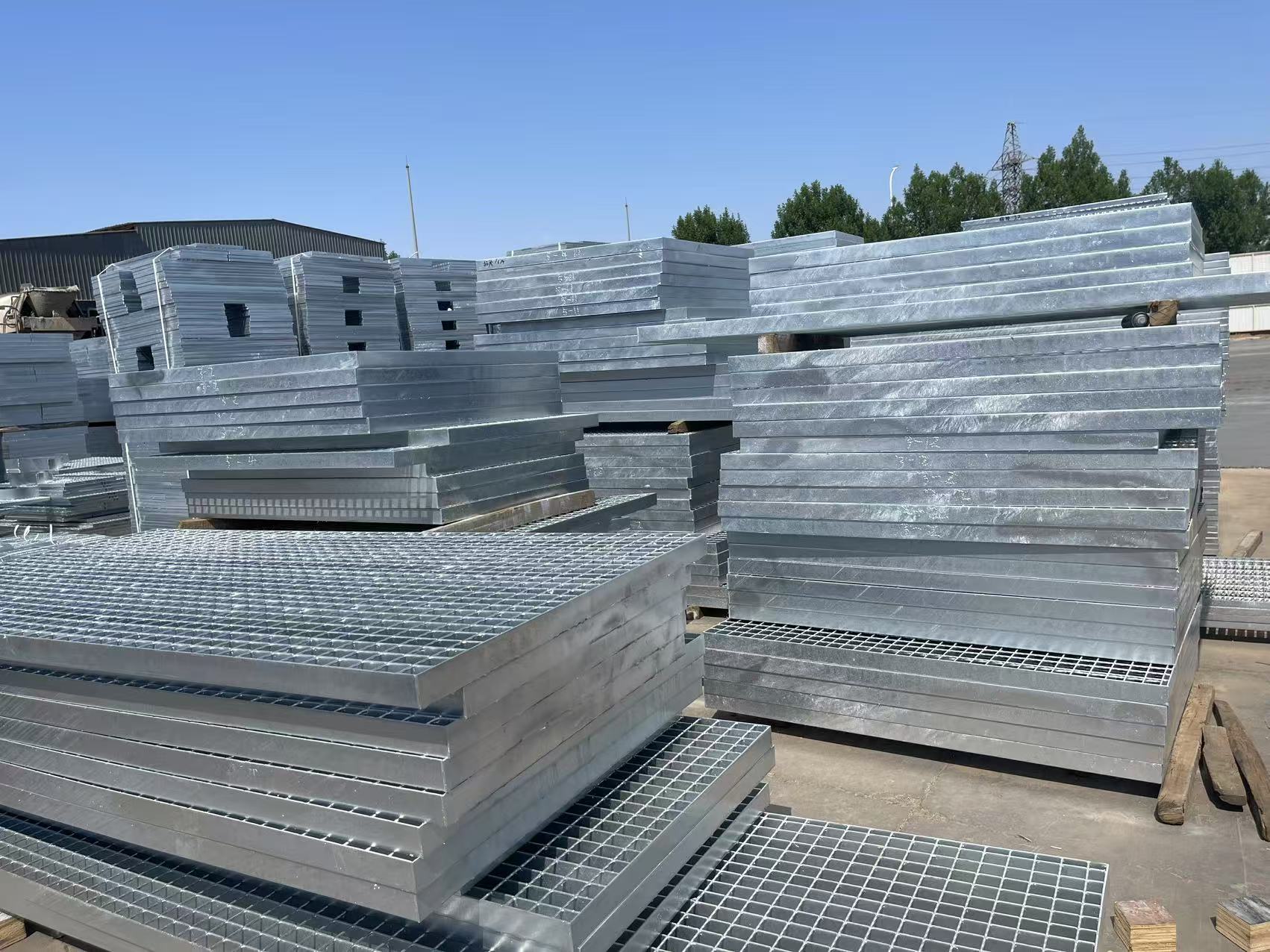
- Panel sizes: Standard panels are 6 ft x 3 ft (1,829 mm x 914 mm) or custom-fabricated to fit specific structural supports
The defining feature that sets this product apart from light-duty or standard alternatives is the cross-sectional area of the bearing bars. By increasing either the thickness or the depth (or both), manufacturers dramatically improve the moment of inertia and section modulus, resulting in a product that can span greater distances while supporting heavier loads without excessive deflection.
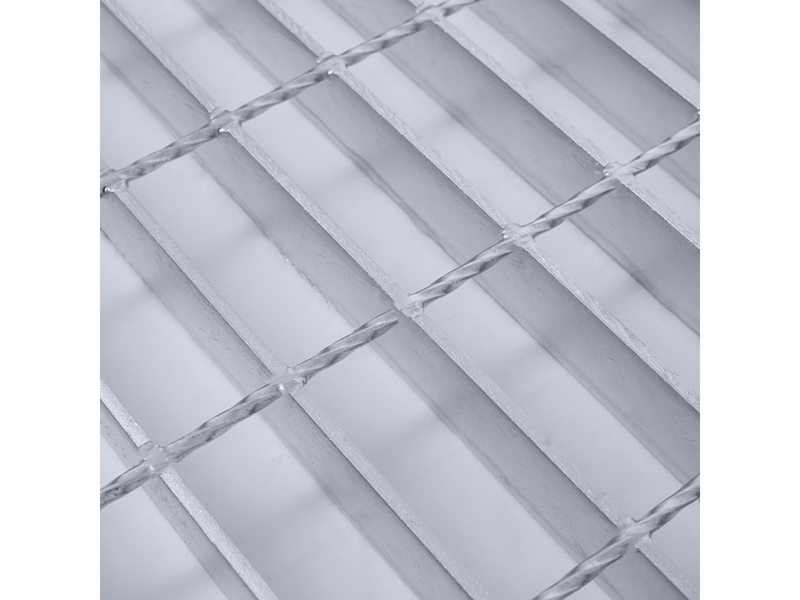
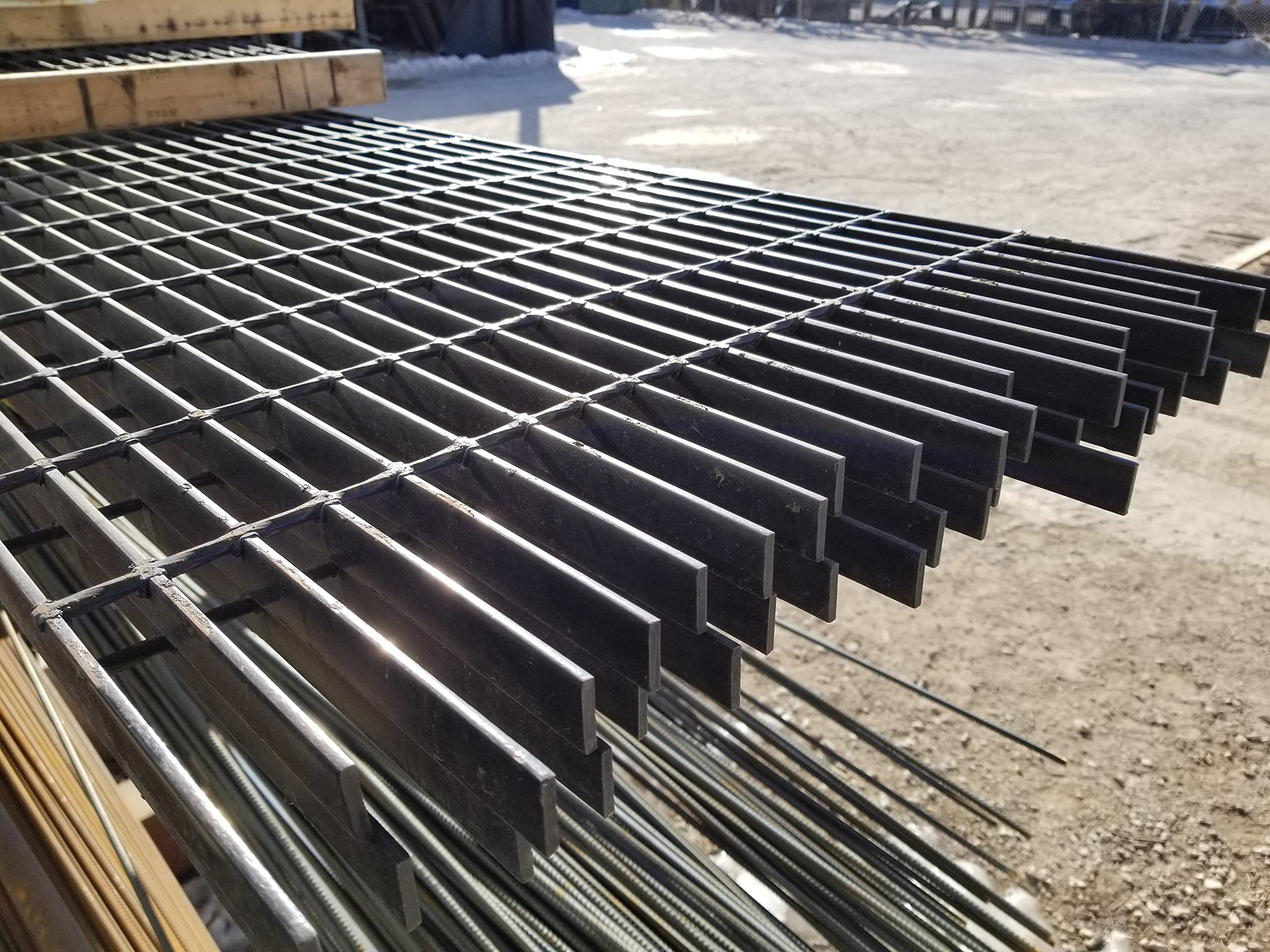
Heavy duty grating is typically produced using the welded construction method, where load-bearing bars are resistance-welded to cross rods at every intersection. This creates a rigid, monolithic panel that distributes point loads across multiple bars. Serrated surfaces are commonly specified to provide additional slip resistance in wet or oily environments.

Load Ratings for Heavy Duty Steel Grating
Understanding load ratings is critical when specifying heavy duty grating for any industrial project. Load capacity is determined by bearing bar size, spacing, span between supports, and the steel grade used. The primary metric is the uniform load capacity, typically expressed in pounds per square foot (psf) or kilonewtons per square meter (kN/m²).
Typical Load Ratings by Configuration
| Bearing Bar Size | Bar Spacing (center) | Span (ft) | Uniform Load (psf) | Deflection (in) |
|---|---|---|---|---|
| 1/4" x 2" (6x51mm) | 1-3/16" (30mm) | 2'-0" | 1,200 | 0.06 |
| 3/8" x 3" (10x76mm) | 1-3/16" (30mm) | 3'-0" | 1,800 | 0.08 |
| 1/2" x 4" (12x100mm) | 1-3/16" (30mm) | 4'-0" | 2,500 | 0.10 |
| 5/8" x 4" (16x100mm) | 1-3/16" (30mm) | 4'-0" | 3,200 | 0.07 |
| 3/4" x 6" (19x150mm) | 1-3/16" (30mm) | 5'-0" | 4,000+ | 0.09 |
Note: Values are approximate for A36 carbon steel. Actual ratings should be verified with manufacturer tables for specific configurations.
Understanding Heavy Duty Steel Grating Load Tables
Heavy duty steel grating load tables are engineering reference charts that list the maximum allowable load for each grating configuration based on span, bearing bar dimensions, and spacing. These tables provide two critical values: allowable uniform load (psf) and allowable concentrated load (lbs applied over a specific area). Engineers use these references to verify that the selected product meets or exceeds the design load requirements for a given application.
When reading these tables, pay attention to the deflection criterion. Most industrial standards limit deflection to L/200 (span divided by 200) or less for heavy duty applications. A configuration that passes the strength check but fails the deflection check is not acceptable for human occupancy or equipment support.
Key variables in load table calculations include:
- Steel yield strength: A36 (36 ksi) vs A1011 (50 ksi) significantly changes capacity
- Bearing bar spacing: Closer spacing (15/16" or 1-3/16") increases load distribution
- Cross rod spacing: Typically 2" or 4" on center for heavy duty
- Span direction: Bearing bars always span the short dimension between supports
- End conditions: Simply supported vs continuous spans affect allowable loads
Heavy Duty Steel Grating vs Standard Steel Grating
Heavy duty steel grating vs standard steel grating: what is the difference? This is one of the most common questions engineers face when specifying industrial flooring. While both products serve the same basic function — providing a walkable, load-bearing surface — the differences in design, materials, and performance are substantial.
Key Differences
| Parameter | Standard Steel Grating | Heavy Duty Steel Grating |
|---|---|---|
| Bearing bar thickness | 1/8" to 3/16" (3-5 mm) | 1/4" to 3/4" (6-19 mm) |
| Bearing bar depth | 3/4" to 1-1/2" (19-38 mm) | 2" to 6" (51-152 mm) |
| Typical load capacity | 150-400 psf | 1,000-4,000+ psf |
| Bar spacing (center) | 1-3/16" to 2-3/8" | 15/16" to 1-3/16" |
| Cross rod diameter | 3/8" to 1/2" | 1/2" to 5/8" |
| Weight per sq ft | 5-10 lbs | 15-40+ lbs |
| Maximum span | 2'-0" to 3'-0" | 4'-0" to 6'-0"+ |
| Typical applications | Walkways, mezzanines, light platforms | Mining, truck wash, heavy equipment platforms |
The most significant difference is the cross-sectional area of the bearing bars. Heavy duty profiles use bearing bars that are both thicker and deeper, providing dramatically higher section modulus. For example, a standard 1/8" x 1" bar has a section modulus of approximately 0.020 in³, while a heavy duty 3/8" x 3" bar has 0.562 in³ — a 28x increase in bending strength.
Additionally, heavy duty configurations typically use closer bearing bar spacing (15/16" on center vs 1-3/16" or wider for standard), which distributes concentrated loads across more bars and reduces deflection under point loads. The cross rods are also larger in diameter, providing greater lateral stability and load sharing between adjacent bearing bars.
When should you upgrade from standard to heavy duty? The decision criteria include: design loads exceeding 500 psf, forklift or heavy equipment traffic, impact loading from dropped materials, large unsupported spans (over 3 ft), and environments where grating failure would create safety or operational hazards.

Bearing Bar Size and Spacing
Bearing bar size and spacing are the two primary variables that determine the load-carrying capacity of heavy duty steel grating. Engineers must understand how these parameters interact to select the most cost-effective configuration for each application.
Bearing Bar Sizes for Heavy Duty Applications
Standard heavy duty bearing bar sizes range from 1/4" x 2" up to 3/4" x 6" and beyond. The depth (vertical dimension) is the dominant factor in bending strength — a deeper bar provides exponentially greater resistance to deflection. For example:
- 1/4" x 2" (6x51mm): Minimum heavy duty configuration, suitable for light vehicle traffic and spans up to 2 ft
- 3/8" x 3" (10x76mm): Medium heavy duty, used for fixed load platforms and truck wash bays with spans of 3-4 ft
- 1/2" x 4" (12x100mm): True heavy duty, specified for mining operations and heavy equipment access with spans of 4-5 ft
- 5/8" x 4" (16x100mm): Extra heavy duty for extreme point loads, such as crane outrigger pads and crusher platforms
- 3/4" x 6" (19x150mm): Maximum heavy duty configuration for blast-proof structures and ultra-heavy industrial flooring
Heavy Duty Steel Grating Bearing Bar Spacing Standards
Heavy duty steel grating bearing bar spacing is typically closer than standard grating to ensure load distribution and minimize deflection under concentrated loads. The standard spacing options are:
- 15/16" on center (23.8mm): Tightest standard spacing, used for the highest load capacities and where pedestrian safety is critical (heel-proof)
- 1-3/16" on center (30.2mm): Most common heavy duty spacing, balancing load capacity with material cost and weight reduction
- 1-5/8" on center (41.3mm): Used for lighter heavy duty applications where cost optimization is prioritized
Bearing bar spacing directly affects how a concentrated load is distributed. At 1-3/16" spacing, a 6" x 6" wheel contact patch engages approximately 5 bearing bars. At 15/16" spacing, the same patch engages 6-7 bars, reducing the load per bar by roughly 20% and decreasing total deflection proportionally.
When selecting bearing bar spacing, also consider the application environment. For truck wash platforms where mud, gravel, and debris must fall through the grating, wider spacing may be preferred. For pedestrian walkways in mining facilities where workers carry heavy tools, tighter spacing provides better comfort and safety.
How to Choose Heavy Duty Steel Grating for Industrial Flooring
Selecting the right heavy duty steel grating for industrial flooring requires a systematic evaluation of the operating conditions, loading scenarios, and environmental factors. Here is a step-by-step framework to guide your selection process.
Step 1: Define the Design Loads
Industrial flooring must accommodate multiple load types. Determine the worst-case loading scenario for each area:
- Uniform live load: The distributed weight of materials, equipment, and personnel (e.g., 1,000 psf for a warehouse floor)
- Concentrated load: Point loads from machinery feet, forklift wheels, or stacked pallets
- Impact load: Dynamic forces from falling tools, dumped materials, or moving equipment
- Seismic/wind load: Lateral forces in earthquake-prone or outdoor elevated installations
Step 2: Determine Support Spacing
The span between support beams is often the first constraint. Longer spans require deeper bearing bars and tighter spacing. Measure the center-to-center distance between structural supports. If the span exceeds 4 ft, heavy duty profiles with bars at least 3" deep are typically required.
Step 3: Select Bearing Bar Configuration
Use heavy duty steel grating load tables to match the design loads and span to a specific bar size and spacing. Always verify that the deflection under full load does not exceed L/200 (or stricter for precision applications). For example, a 4-ft span supporting 2,000 psf may require 1/2" x 4" bars at 1-3/16" spacing.
Step 4: Choose Material and Finish
Carbon steel with hot-dip galvanizing is the most economical choice for most heavy duty applications, offering good corrosion resistance for indoor and outdoor use. Stainless steel (304 or 316) is specified for corrosive environments such as chemical plants, food processing, and offshore platforms.
Step 5: Consider Surface Treatment
For wet, oily, or inclined applications, specify serrated bearing bars to provide anti-slip traction. The serrations are cold-pressed into the top surface of each bearing bar, creating a textured grip pattern that significantly improves slip resistance compared to plain smooth bars.
Step 6: Verify Compliance
Ensure the selected grating meets applicable standards: ANSI/NAAMM MBG 531 for design and manufacturing, OSHA 1910.23 for walking-working surfaces, and local building codes. Request certified load test reports from the manufacturer before finalizing specifications.

Heavy Duty Steel Grating for Mining Applications
The mining industry is one of the largest consumers of heavy duty steel grating for mining applications, where flooring and platform systems must endure some of the harshest conditions found in any industrial setting. From underground access walkways to surface processing plants, this product provides the strength, durability, and safety required for mining operations.
Mining Applications
- Crushing and screening platforms: Heavy duty grating supports the immense weight of crushers, screens, and conveyors while allowing rock dust and debris to fall through the open surface
- Maintenance and service decks: Mechanics need stable, high-capacity platforms to service haul trucks, excavators, and drills weighing 50-200+ tons
- Conveyor crossover walkways: Elevated walkways spanning conveyor systems require grating that can handle concentrated foot traffic while remaining lightweight enough for structural support
- Stair treads and landings: Serrated heavy duty profiles are commonly used for staircase systems in processing plants where slip resistance is critical
- Drainage and sump covers: Open grating allows water and slurry to drain while supporting heavy equipment traffic above
Truck Wash Platform Applications
Truck wash platforms represent one of the most demanding applications for heavy duty steel grating. These platforms must support the full weight of loaded haul trucks, dump trucks, and cement mixers while providing excellent drainage and slip resistance in constantly wet conditions.
For truck wash applications, heavy duty grating is typically specified with 3/8" x 3" or 1/2" x 4" bearing bars at 1-3/16" spacing in hot-dip galvanized carbon steel. The galvanized coating protects against the corrosive effects of water, detergents, and chemical cleaning agents. Serrated surfaces are strongly recommended to prevent vehicle and personnel slips on the wet grating surface.
Key design considerations for truck wash platforms include:
- Wheel load ratings: Design for 30,000-60,000 lbs per axle with a safety factor of 1.5 or higher
- Drainage: 60-70% open area allows water and cleaning solution to flow through, reducing pooling and maintaining traction
- Corrosion protection: Hot-dip galvanizing per ASTM A123 or stainless steel 304/316 for aggressive chemical wash-down environments
- Modular panels: 6' x 3' panels with banded ends for easy removal during pit cleaning and maintenance
Other Common Applications of Heavy Duty Steel Grating
Beyond mining and truck wash facilities, heavy duty grating serves a wide range of industrial sectors, each with unique performance requirements.
Steel Mills and Foundries
In steel production facilities, grating must withstand extreme heat (up to 500°F or higher near furnaces), molten metal splashes, and heavy impact loads from scrap handling. Heavy duty configurations with 1/2" x 4" or larger bars are commonly used for furnace platforms, ladle maintenance areas, and rolling mill access floors. Stainless steel or special high-temperature coatings are often specified for heat-affected zones.
Offshore Oil and Gas Platforms
Offshore platforms require heavy duty grating that can withstand saltwater corrosion, hurricane-force winds, and continuous vibration from machinery. Hot-dip galvanized heavy duty profiles are standard for helicopter landing decks, equipment platforms, and personnel walkways. Stainless steel versions are specified for areas exposed to H₂S and other corrosive gases.
Power Generation Plants
Coal, gas, and nuclear power facilities use heavy duty profiles for turbine deck platforms, cooling tower access walkways, and coal-handling areas. Load requirements vary from 300 psf for light maintenance walkways to 1,500+ psf for turbine and boiler access platforms.
Wastewater Treatment Facilities
Heavy duty grating is used for tank covers, filter platform walkways, and sludge handling areas where corrosion resistance is essential. Stainless steel 316L is the preferred material due to exposure to hydrogen sulfide and other corrosive gases in treatment processes.
Ports and Shipping Facilities
Dockside loading platforms, container handling areas, and shipyard maintenance decks require heavy duty grating capable of supporting crane loads, container weights, and heavy vehicle traffic. The grating must also provide excellent drainage and withstand saltwater exposure.
Chemical Processing Plants
Chemical plants require heavy duty grating that can resist aggressive chemicals while supporting heavy piping and equipment loads. Stainless steel 304 or 316 is typically specified, with bearing bar sizes selected based on the specific load requirements of each processing area.
Heavy Duty Steel Grating Cost Considerations
Understanding the cost of heavy duty steel grating is essential for project budgeting and material selection. Several factors influence the final price per square foot.
Cost Factors
- Bearing bar size: Larger bars use more steel, driving up material cost. A 1/2" x 4" grating panel costs approximately 40-60% more than a 1/4" x 2" panel of the same dimensions
- Steel grade: A36 carbon steel is the most economical. Stainless steel 304 adds 2-3x the cost, while 316L can add 4-5x
- Surface finish: Hot-dip galvanizing adds 15-25% to the base cost but provides long-term corrosion protection. Serrated surfaces add 5-10%
- Bearing bar spacing: Tighter spacing (15/16") increases material weight by 10-20% compared to 1-3/16" spacing
- Quantity and lead time: Bulk orders (500+ sq ft) typically receive volume discounts. Custom sizes and rush orders command premiums
Typical Price Ranges
While prices fluctuate with steel market conditions, approximate ranges for heavy duty grating (as of 2026) are:
- Carbon steel, hot-dip galvanized, 1/4" x 2" bars: $25-$35 per sq ft
- Carbon steel, hot-dip galvanized, 3/8" x 3" bars: $35-$50 per sq ft
- Carbon steel, hot-dip galvanized, 1/2" x 4" bars: $50-$70 per sq ft
- Stainless steel 304, 3/8" x 3" bars: $80-$120 per sq ft
- Stainless steel 316L, 1/2" x 4" bars: $120-$180 per sq ft
These are ballpark figures for standard 6' x 3' panels. Custom fabrication, special end bands, and small quantities will increase the per-unit cost. Always request a formal quotation from manufacturers for your specific configuration and quantity.
Long-Term Value
While heavy duty grating has a higher upfront cost than standard options, its extended service life in demanding environments often results in lower total cost of ownership. A properly specified and galvanized heavy duty product can last 20-30 years in outdoor industrial environments with minimal maintenance, whereas standard grating might need replacement in 5-10 years under the same conditions.
Conclusion
Heavy duty steel grating is the go-to solution for industrial flooring, walkways, and platforms that must withstand extreme loads — from 1,000 psf light industrial applications to 4,000+ psf heavy mining and steel mill environments. By understanding the load rating system, interpreting heavy duty steel grating load tables correctly, selecting appropriate bearing bar sizes and spacing, and specifying the right material and finish for each environment, engineers can design safe, durable, and cost-effective solutions.
Key takeaways from this guide:
- This product category is defined by bearing bars at least 1/4" thick and 2" deep, with load capacities starting at 1,000 psf
- Heavy duty steel grating load tables are essential engineering references that match specific bar configurations to allowable loads and spans
- Heavy duty steel grating bearing bar spacing of 15/16" to 1-3/16" on center provides optimal load distribution for industrial applications
- Mining and truck wash platforms are among the most demanding applications, requiring hot-dip galvanized or stainless steel construction
- These products cost 2-3x more than standard grating, but the extended service life and safety benefits justify the investment in high-load environments
- Always consult manufacturer load tables and engineering specifications before finalizing your selection
For your next industrial flooring project, partner with a reputable manufacturer that can provide certified load test data, custom fabrication capabilities, and expert guidance on specification. The right choice ensures worker safety, operational efficiency, and long-term reliability in even the most demanding conditions.