Introduction
Selecting the right steel grating for an industrial project is more complex than most buyers expect. A grating specification affects safety, load-bearing capacity, corrosion resistance, installation costs, and long-term maintenance — all of which have a direct impact on your project's bottom line. Whether you are designing a walkway for a petrochemical plant, a platform for a wastewater treatment facility, or a mezzanine floor for a warehouse, the question of how to choose the right grating for your project requires careful evaluation across multiple dimensions.
This guide presents a structured 8-step selection framework that covers every critical decision factor: operating environment, load requirements, material selection, grating type, bearing bar dimensions, surface treatment, budget constraints, and supplier qualifications. Each step is explained in practical terms with specific recommendations and comparison data so you can make an informed purchasing decision. By following this framework, you will be able to narrow down the hundreds of available steel grating configurations to the one that best matches your performance needs and budget.
The 8-Step Framework for Choosing the Right Grating for Your Project
How to Choose the Right Grating for Your Project: The 8-Step Framework
The most reliable way to approach how to choose the right grating for your project is to follow a systematic decision process rather than picking a product at random. Each step in this framework eliminates unsuitable options and narrows the field until the optimal solution becomes clear.
| Step | Decision Factor | Key Question to Answer |
|---|---|---|
| 1 | Operating Environment | Where will the grating be installed — indoors or outdoors, corrosive or clean? |
| 2 | Load Requirements | What weight must the grating support — pedestrian, light vehicle, or heavy machinery? |
| 3 | Material Selection | Which metal alloy best suits the environment and load conditions? |
| 4 | Grating Type | Should the grating be welded, press locked, or swage locked? |
| 5 | Dimensions & Configuration | What bearing bar size, spacing, and panel dimensions are needed? |
| 6 | Surface Treatment | Does the grating need galvanizing, painting, or a serrated surface? |
| 7 | Budget & Lifecycle Cost | What is the total cost of ownership over the grating\'s service life? |
| 8 | Supplier Qualification | Does the manufacturer have the quality certifications and capacity to deliver? |
Moving through these steps sequentially ensures that you do not, for example, choose a decorative grating type before verifying load requirements, or select a material based solely on price without considering corrosion risks. The framework works for any application — from light-duty indoor catwalks to heavy duty steel grating for industrial flooring subject to frequent forklift traffic. The following sections dive deep into each step with actionable guidance and technical specifics.
Step 1 — Assess the Operating Environment
The operating environment is the single most important factor that determines material and coating choices. Installing the wrong grating in a corrosive or wet environment can lead to premature failure, safety hazards, and costly replacements. Before selecting any product, answer these questions about the installation site:
Indoor vs. Outdoor Installation
Indoor installations in climate-controlled facilities are the least demanding. Standard carbon steel with a painted or mill finish is often sufficient. Outdoor installations, by contrast, are exposed to rain, snow, UV radiation, and temperature cycles. For outdoor grating, hot-dip galvanized (HDG) steel is the default standard because the zinc coating provides long-term corrosion protection. In coastal areas where salt spray accelerates corrosion, stainless steel grating or heavier galvanized coatings are recommended.
Chemical and Moisture Exposure
Industrial floor grating in chemical processing plants, food production facilities, and wastewater treatment plants faces aggressive chemical exposure. Acids, alkalis, chlorides, and cleaning agents can attack unprotected steel. For such environments, stainless steel 316 (which contains molybdenum for enhanced pitting resistance) is the preferred material. In food processing facilities, the grating must also be easy to clean and resistant to the sanitizing chemicals used in wash-down procedures.
Temperature Extremes
Steel grating installed in furnaces, cold storage warehouses, or outdoor areas in extreme climates must accommodate thermal expansion. Carbon steel performs well from -40°C to 400°C. Beyond 400°C, special alloys or heat-resistant coatings are required. In cryogenic applications, stainless steel maintains its impact resistance better than carbon steel.
Wet or Slippery Conditions
For areas that are frequently wet or oily, a serrated grating surface (where the bearing bars have raised teeth) provides significantly better slip resistance than plain smooth bars. Many safety regulations mandate slip-resistant surfaces in wet environments.
By thoroughly assessing the operating environment first, you eliminate materials and coatings that would fail prematurely. This step directly feeds into Step 3 (material selection) and Step 6 (surface treatment decisions).
Step 2 — Determine Load Requirements
Understanding load requirements is essential for determining the correct bearing bar size, spacing, and overall grating thickness. Undersized grating risks structural failure; oversized grating wastes material and budget. Load requirements fall into three categories:
Pedestrian Traffic (Light Duty)
Catwalks, mezzanine floors, and inspection platforms that support foot traffic only typically require a load capacity of 100 psf (pounds per square foot) or less. Light-duty grating with bearing bars of 1" x 1/8" or 1-1/4" x 3/16" at standard spacing is usually adequate. For how to choose the right grating for your project under pedestrian-only loads, deflection limits (typically L/200 or L/240 where L is the span) are the governing factor rather than ultimate strength.
Light Vehicular Traffic (Medium Duty)
Areas where forklifts, hand trucks, or golf carts travel require medium-duty grating. Load capacities of 300-500 psf are typical. Bar sizes increase to 1-1/2" x 3/16" or 1-3/4" x 3/16" with closer bearing bar spacing (center-to-center). The concentrated wheel loads from forklifts are often more critical than uniform distributed loads, so the load table should be checked for point-load capacity.
Heavy Industrial Traffic (Heavy Duty)
Truck loading docks, crane runways, and heavy-equipment platforms require heavy duty steel grating with bearing bars up to 2-1/2" x 1/4" or larger. Load capacities exceed 1,000 psf. The grating load capacity chart provided by the manufacturer should be consulted to verify that both uniform load and concentrated load requirements are met at the specified clear span.
How to Read a Load Table
Every reputable manufacturer publishes load tables showing the safe load capacity for each grating type at various spans. A typical table lists:
- Bearing bar size (depth x thickness)
- Bar spacing (center-to-center)
- Clear span (distance between supports)
- Allowable uniform load (psf)
- Allowable concentric load (lbs per foot of width)
- Deflection at rated load (inches)
Always use the clear span (the unsupported distance) rather than the overall panel length when reading load tables. If your project requires heavy duty steel grating for industrial flooring, look for bearing bar depths of 2" or greater and bar thicknesses of 1/4" or more.
Step 3 — Select the Grating Material
Carbon Steel
Carbon steel is the most widely used material for steel grating because it offers the best strength-to-cost ratio. Standard ASTM A36 carbon steel grating is suitable for most indoor applications and outdoor installations when protected with a hot-dip galvanized coating. Carbon steel grating is available in both welded and press-locked configurations and supports the widest range of load capacities. For how to choose the right grating for your project, carbon steel is the default starting point — it is economical, strong, and readily available. However, it requires corrosion protection in damp or chemically aggressive environments.
Stainless Steel 304 vs 316
Stainless steel grating is specified when corrosion resistance is paramount. Grade 304 (18% chromium, 8% nickel) is suitable for food processing, indoor chemical handling, and general corrosive environments. Grade 316 (16% chromium, 10% nickel, 2% molybdenum) offers superior resistance to chlorides and is recommended for coastal installations, marine environments, and pharmaceutical facilities where sanitation is critical. Stainless steel grating 304 vs 316: choose 304 for most industrial applications where occasional moisture exposure occurs; choose 316 for continuous saltwater exposure or aggressive chemical wash-down environments. Stainless steel grating costs 3-5x more than carbon steel but provides maintenance-free service for decades.
Aluminum Grating
Aluminum grating is lightweight (approximately one-third the weight of steel), naturally corrosion-resistant, and non-sparking — making it ideal for applications where weight is a concern, such as mezzanine decks or platforms on existing structures. It is commonly used in food processing, marine, and offshore applications. However, aluminum has lower load capacity than steel and is not suitable for heavy-duty applications. Aluminum grating is available in both welded and swage-locked configurations.
The table below summarizes material selection criteria:
| Material | Best For | Load Capacity | Corrosion Resistance | Relative Cost |
|---|---|---|---|---|
| Carbon Steel (Galvanized) | General industrial, outdoor | Excellent | Good (with coating) | $ (Low) |
| Stainless Steel 304 | Food processing, chemical | Excellent | Very Good | 34452$ (Medium-High) |
| Stainless Steel 316 | Marine, pharmaceutical | Excellent | Superior | 3445234452 (High) |
| Aluminum | Weight-sensitive, marine | Moderate | Excellent (natural) | 34452 (Medium) |
Step 4 — Choose the Right Grating Type
The method by which bearing bars are joined to cross bars defines the grating type. Each type offers different structural characteristics, cost profiles, and aesthetic qualities.
Welded Steel Grating
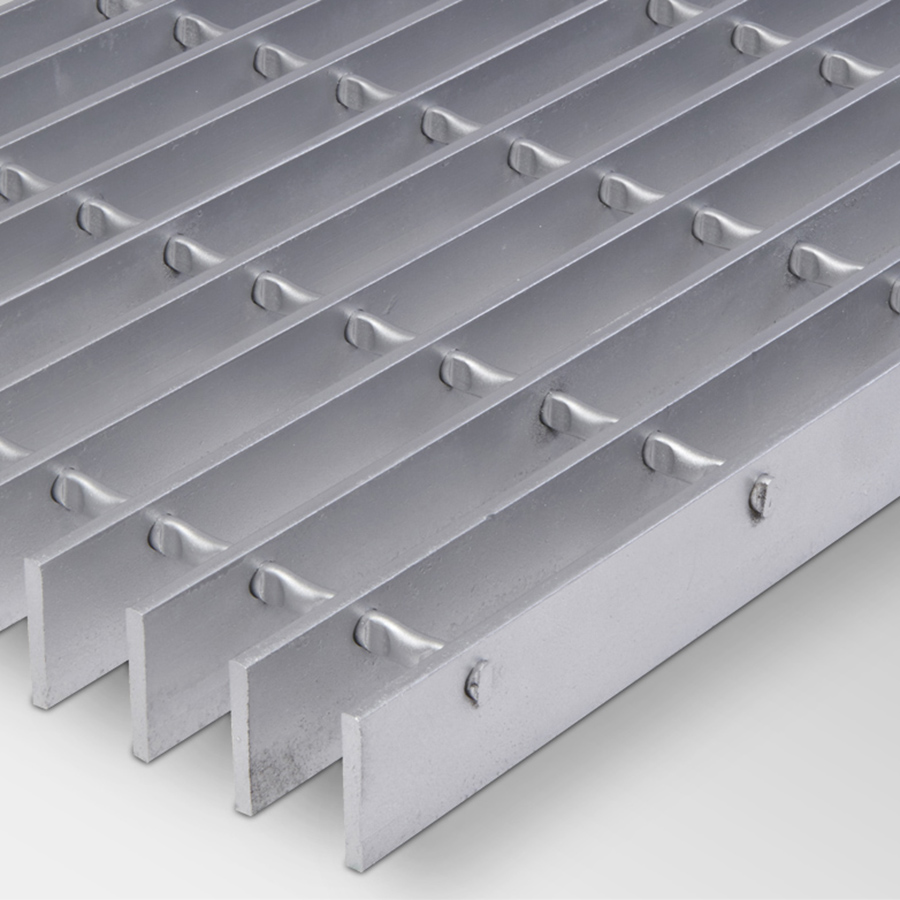
Welded steel grating is the most common and cost-effective type for industrial applications. Bearing bars are resistance-welded to cross bars at every intersection, creating a rigid, one-piece panel with maximum structural integrity. Welded grating offers the highest load capacity of all types and is available in the widest range of bar sizes and spacings. It is the preferred choice for heavy-duty industrial flooring, truck ramps, and platforms where load-bearing is critical. Welded grating panels can be manufactured up to 20 feet in length (or longer for special orders) and are available in carbon steel, stainless steel, and aluminum.
Press Locked Grating
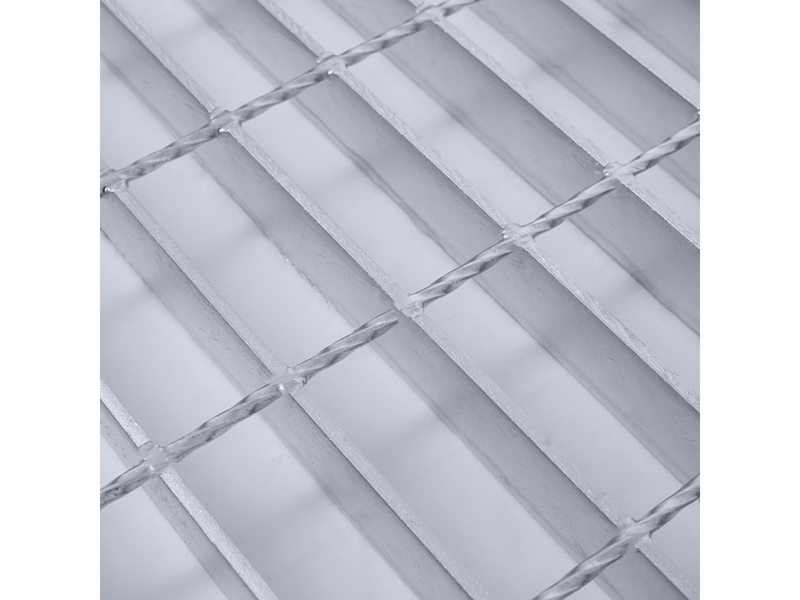
Press locked grating uses a mechanical interlock — bearing bars are punched and cross bars are pressed through under high pressure, creating a permanent joint without welding or heat. This type offers a smooth, clean appearance and is ideal for architectural applications, walkways, and mezzanine flooring where aesthetics matter. Press locked grating is slightly less strong than welded grating but offers better precision and a more uniform appearance. It is available in carbon steel, stainless steel, and aluminum. A notable advantage is that the absence of welding means there is no heat-affected zone, preserving the full corrosion resistance of stainless steel and aluminum materials.
Swage Locked Grating
Swage locked grating features rectangular bearing bars with round cross bars that are expanded (swaged) into place under pressure. This type produces an exceptionally smooth surface with no protruding elements, making it ideal for architectural railing, screening, and decorative applications. Swage locked grating panels are lighter and typically specified for mid-to-light load applications such as pedestrian walkways, bridge decking, and ventilation grilles.
When deciding how to choose the right grating for your project by type:
- Choose welded for maximum strength, heavy loads, and cost efficiency
- Choose press locked for architectural applications and smooth appearance
- Choose swage locked for lightweight, decorative, or low-load applications
Step 5 — Specify Bearing Bar Dimensions and Panel Configuration
Bearing bar dimensions — specifically bar depth (height), bar thickness (width), and bar spacing — are the primary determinants of load capacity and cost. Getting these right is critical for both structural performance and budget efficiency.
Bearing Bar Depth and Thickness
Bar depth is the vertical dimension of the bearing bar and is the most important factor in load capacity. Deeper bars provide greater section modulus and therefore higher load-bearing capacity. Standard bar depths range from 1 inch (25 mm) for light-duty applications to 2-1/2 inches (63 mm) or more for heavy-duty industrial use. Bar thickness typically ranges from 1/8 inch (3 mm) to 1/4 inch (6 mm). The combination of depth and thickness is expressed as a fraction (e.g., 1-1/2" x 3/16") — a standard size for medium-duty industrial grating.
Bar Spacing and Opening Size
Bearing bar spacing (center-to-center) affects both load capacity and the size of objects that can pass through. Common spacings are:
- 1-3/16" spacing — Standard for most industrial applications; provides good strength and prevents most debris from falling through
- 1-7/8" spacing — Used where larger openings are acceptable; lighter and less expensive
- 3/4" spacing — Close spacing for architectural or safety applications where small objects must not pass through
The clear opening size (the gap between bars) is approximately the center-to-center spacing minus the bar thickness. For pedestrian walkways, a maximum clear opening of 1 inch is recommended to prevent narrow heels from catching.
Panel Size and Span Direction
Standard panel sizes vary by manufacturer, but typical widths are 3 feet (915 mm) or 4 feet (1220 mm), and lengths up to 20 feet (6 meters). The bearing bars must run perpendicular to the supporting structure (span direction). The clear span — the distance between support beams — determines the required bar depth. Always select the bar depth based on the longest clear span and the design load, using the manufacturer\'s load tables. Over-spanning a thinner bar can result in excessive deflection or structural failure.
For industrial floor grating selection, a bearing bar size of 1-1/2" x 3/16" at 1-3/16" spacing is the most common starting point for medium-duty applications. For lighter duty, 1-1/4" x 3/16" at 1-7/8" spacing may suffice. For heavy duty, increase to 2" x 1/4" or larger.
Step 6 — Decide on Surface Treatment and Coating
Surface treatment and coating directly affect the service life, safety, and appearance of steel grating. The choice depends on the operating environment identified in Step 1 and the material selected in Step 3.
Hot-Dip Galvanized (HDG)
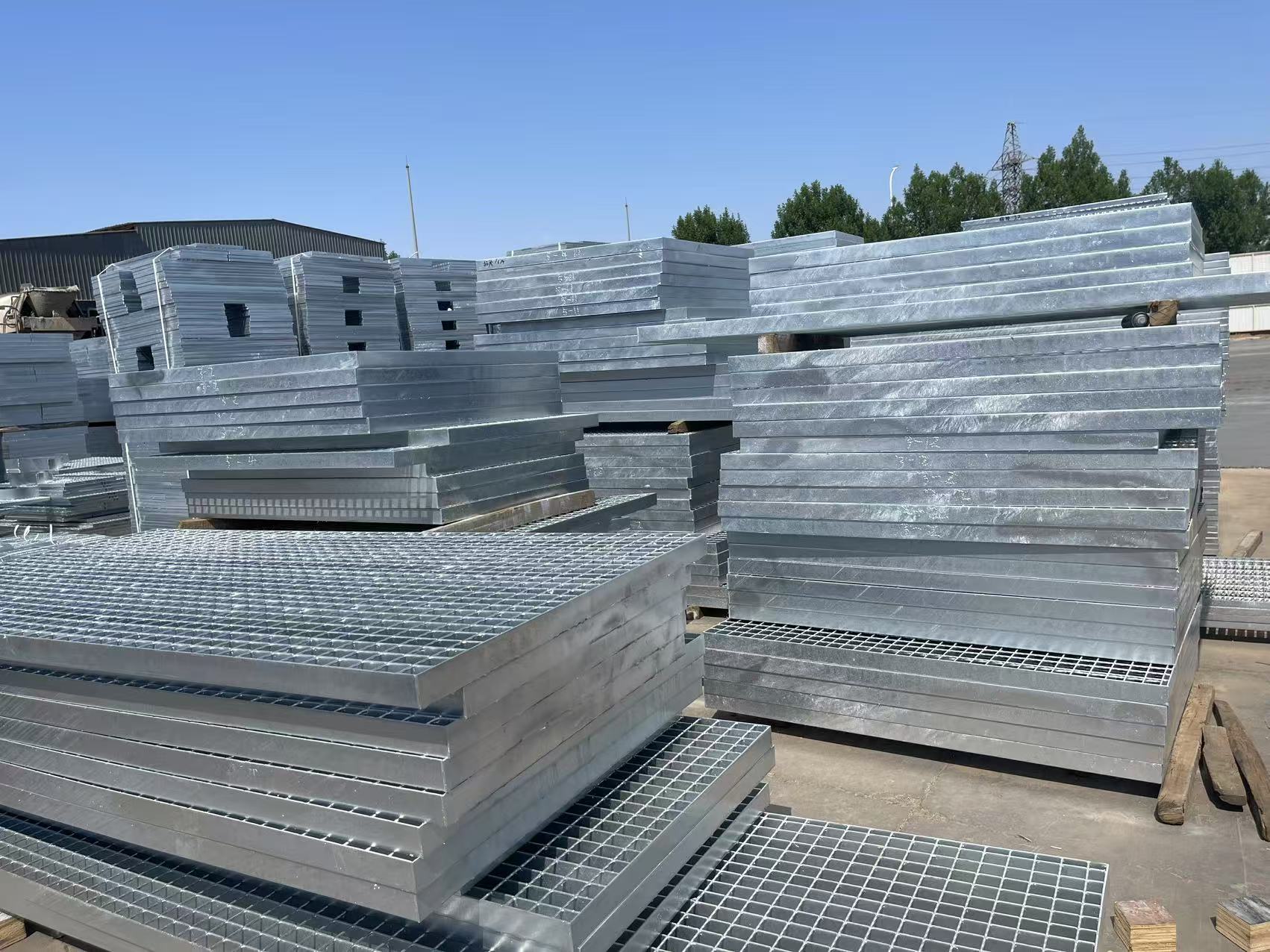
Hot-dip galvanizing is the industry standard for corrosion protection of carbon steel grating. The grating panels are immersed in a bath of molten zinc at approximately 840°F (449°C), forming a metallurgically bonded zinc-iron alloy coating that provides cathodic protection. A standard HDG coating on steel grating typically delivers 20-50 years of maintenance-free service in most atmospheric conditions, depending on the environment. For galvanized steel grating used outdoors, HDG is the most cost-effective long-term protection method. The coating thickness typically ranges from 2.0 to 4.0 mils (50-100 microns).
Serrated vs Smooth Surface
The surface texture of the bearing bars is a critical safety consideration:
- Smooth (flat) bars — Provide a flat walking surface suitable for dry, clean environments. They are easier to clean and less expensive.
- Serrated bars — Have V-shaped notches or teeth along the top edge that create a slip-resistant surface. Serrated steel grating is recommended for wet, oily, or icy conditions, and is often required by safety codes for industrial flooring in hazardous environments. Serrated bars provide 2-3x better slip resistance than smooth bars.
Serrated grating can be manufactured in carbon steel (galvanized), stainless steel, or aluminum. If your application involves any moisture, grease, or food processing, serrated grating is strongly recommended.
Paint and Other Coatings
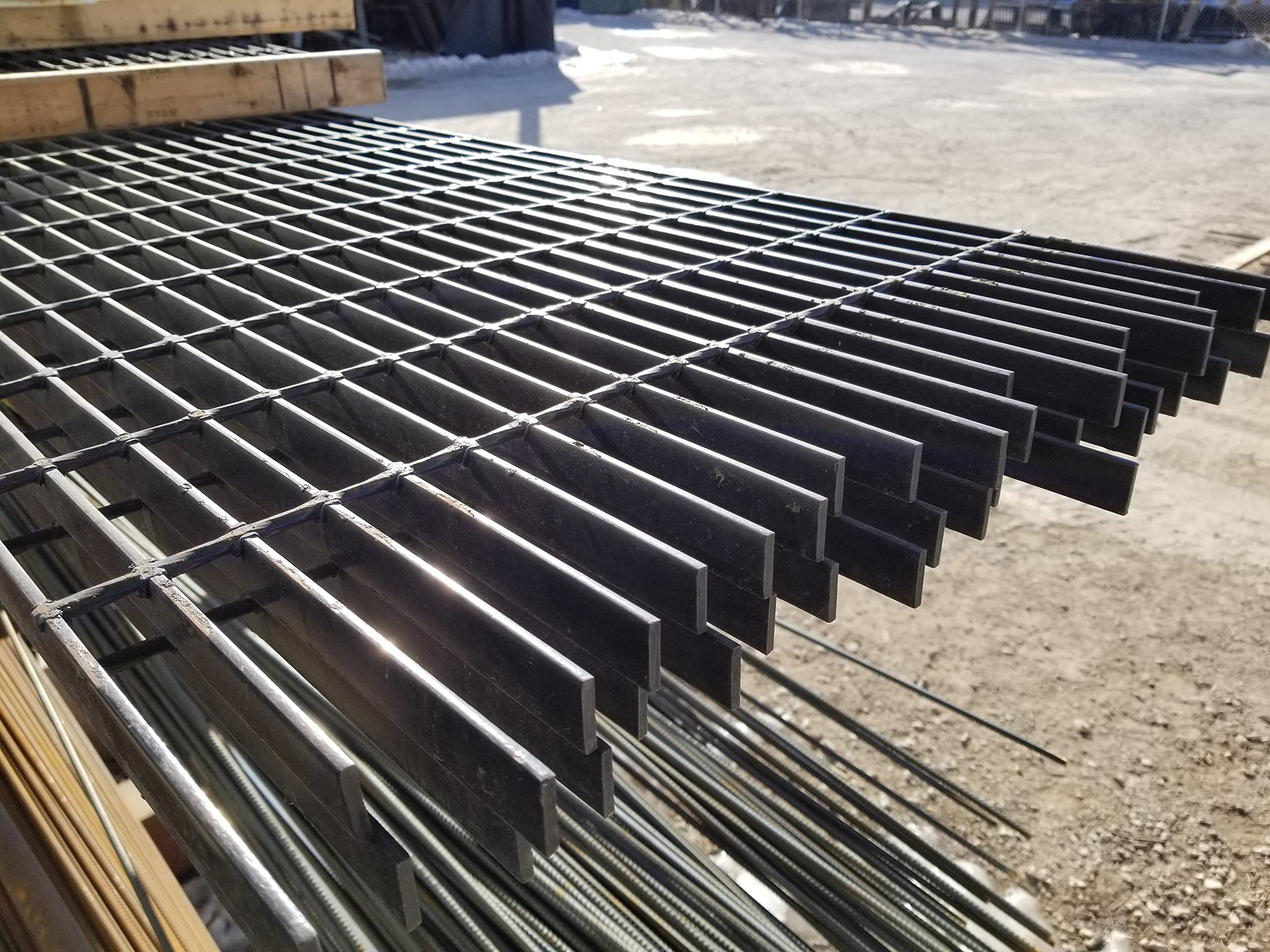
For indoor applications in dry environments, black painted or mill finish (uncoated) carbon steel grating is an economical choice. Common paint options include:
- Industrial enamel — Low-cost, suitable for dry indoor use
- Epoxy coating — Better chemical resistance for light chemical exposure
- Polyurethane — Durable, UV-resistant for outdoor use (though not as durable as HDG)
For stainless steel grating, no coating is needed — the natural chromium oxide layer provides corrosion protection. However, stainless steel can be passivated or electropolished to enhance surface cleanliness, which is important in pharmaceutical and food-grade applications.
Step 7 — Evaluate Budget and Total Cost of Ownership
Price is always a consideration, but the cheapest grating panel upfront can become the most expensive choice over time. A proper cost analysis considers the total cost of ownership (TCO), which includes initial material cost, fabrication, installation, maintenance, and eventual replacement.
Initial Material Costs
The steel grating price varies significantly by material, type, size, and coating. As a general guide:
- Carbon steel (mill finish): Lowest cost per square foot. Budget-friendly for indoor use.
- Carbon steel (hot-dip galvanized): Adds 15-30% to the base steel cost but eliminates maintenance for decades.
- Stainless steel 304: 3-4x the cost of carbon steel, but no coating or maintenance needed.
- Stainless steel 316: 4-5x the cost of carbon steel, essential for marine environments.
- Aluminum: 2x the cost of carbon steel; often competitive with galvanized steel when weight savings and corrosion resistance are factored in.
Lifecycle Cost Comparison
A standard 10-year lifecycle cost analysis often shows that galvanized carbon steel is the most economical choice for outdoor industrial applications. While the upfront cost is higher than painted steel, the elimination of repainting every 2-3 years results in significant savings. Stainless steel becomes economical in aggressive environments where galvanized coatings would fail within 5 years. For how to choose the right grating for your project on a budget, consider:
- If the project life is < 10 years and indoor: mill finish carbon steel
- If the project life is > 10 years and outdoor: hot-dip galvanized carbon steel
- If maintenance access is difficult: stainless steel (eliminates future maintenance)
Fabrication and Installation Costs
Custom fabrication — such as cutouts for pipes, banding for edges, or special shapes — adds to the total cost. Standard panels in common sizes are the most economical. Installation costs depend on the attachment method: welding clips, saddle clips, or serrated clamps. Simple panel layouts with standard spans reduce both material and labor costs.
Step 8 — Partner with a Reliable Manufacturer
The final and most important step in the selection process is choosing the manufacturer or supplier who will fabricate and deliver your grating. Even the best specification is worthless if the supplier cannot deliver quality products on time and within tolerance.
Quality Certifications
A reputable grating manufacturer should hold relevant quality certifications. Look for ISO 9001:2015 certification for quality management systems. For projects requiring specific standards, verify that the manufacturer complies with ASTM A36 (carbon steel), ASTM A240/A480 (stainless steel), or ASTM B221 (aluminum) material standards. For heavy duty steel grating for industrial flooring, check that load tables are independently verified and traceable to actual test results.
Manufacturing Capabilities
Not all suppliers offer the same range of products. Evaluate whether the manufacturer can produce:
- Your required grating type (welded, press locked, swage locked)
- The specific bar sizes and spacings needed
- Custom shapes, cutouts, and banding
- Serrated surfaces or special coatings
- Stainless steel or aluminum if required
A manufacturer that offers in-house hot-dip galvanizing, or has a trusted partnership with a galvanizing facility, simplifies logistics and reduces lead times.
Lead Time and Shipping
Industrial grating panels are heavy — a standard 3' x 20' carbon steel panel weighs 200-400 lbs. Shipping costs can represent 10-25% of the total project cost. Choose a supplier geographically close to your project site when possible. Confirm lead times: standard panels typically ship within 2-4 weeks, while custom fabrications may take 4-8 weeks. Request a written lead-time commitment before placing the order.
Engineering Support and Documentation
The best suppliers provide engineering support including load table verification, shop drawings, and installation guidance. For EPC (Engineering, Procurement, Construction) projects, the supplier should be able to provide certified drawings, material test certificates, and compliance documentation. Ask for references from similar projects, particularly if your application is specialized (e.g., offshore platforms, food-grade facilities, or seismic zones).
For buyers researching how to choose industrial floor grating for my facility, a supplier with a proven track record in your specific industry is worth the premium over an unknown low-cost bidder.
Conclusion
Choosing the right steel grating for your project does not need to be overwhelming. By following this 8-step framework — assess the operating environment, determine load requirements, select the material, choose the grating type, specify dimensions, decide on surface treatment, evaluate total cost of ownership, and partner with a reliable manufacturer — you can systematically eliminate unsuitable options and arrive at the optimal specification with confidence.
To recap the most important takeaways:
- Environment first: Let the installation site dictate material and coating choices, not the other way around.
- Load before type: Determine the load requirements before selecting the grating type. The wrong type with the right load rating is safer than the right type with inadequate capacity.
- Serrated when wet: If there is any chance of moisture, grease, or ice, choose serrated steel grating for slip resistance.
- Galvanize for outdoors: Hot-dip galvanizing is the most cost-effective long-term protection for carbon steel grating in exterior applications.
- Total cost matters: A higher upfront investment in stainless steel or galvanized coating often delivers the lowest total cost over the project life.
- Verify the supplier: Always check the manufacturer\'s certifications, load tables, and industry references before placing an order.
Whether you are specifying industrial floor grating for a new facility, selecting heavy duty steel grating for a loading dock, or simply replacing worn grating panels in an existing structure, this framework gives you a repeatable process for making the right decision every time.
Need help selecting the right steel grating? Contact our engineering team with your project specifications, and we will provide a detailed recommendation with load tables, pricing, and lead times tailored to your requirements.