Introduction
Welded steel grating is one of the most widely used industrial flooring and walkway solutions in the world. Manufactured through an automated resistance welding process, this type of steel grating delivers exceptional strength, durability, and cost-efficiency for applications ranging from platform walkways and trench covers to architectural facades and safety barriers.
Unlike other grating types that rely on mechanical locking or pressure fitting, this product fuses each bearing bar to every cross bar at every intersection, creating a rigid monolithic panel that performs consistently under heavy loads and harsh conditions. This comprehensive guide covers everything from manufacturing techniques and material specifications to load tables, weight charts, surface finishes, and installation best practices.
Whether you are a procurement manager sourcing for an industrial plant, a structural engineer designing a mezzanine floor, or a contractor evaluating options for a municipal project, this article provides the technical depth and practical data required to make informed decisions for your specific application.
What Is Welded Steel Grating?
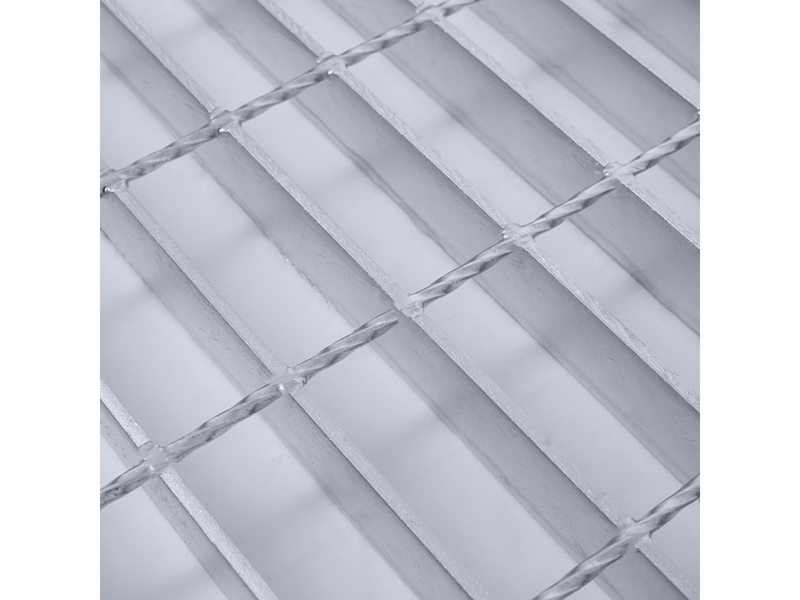
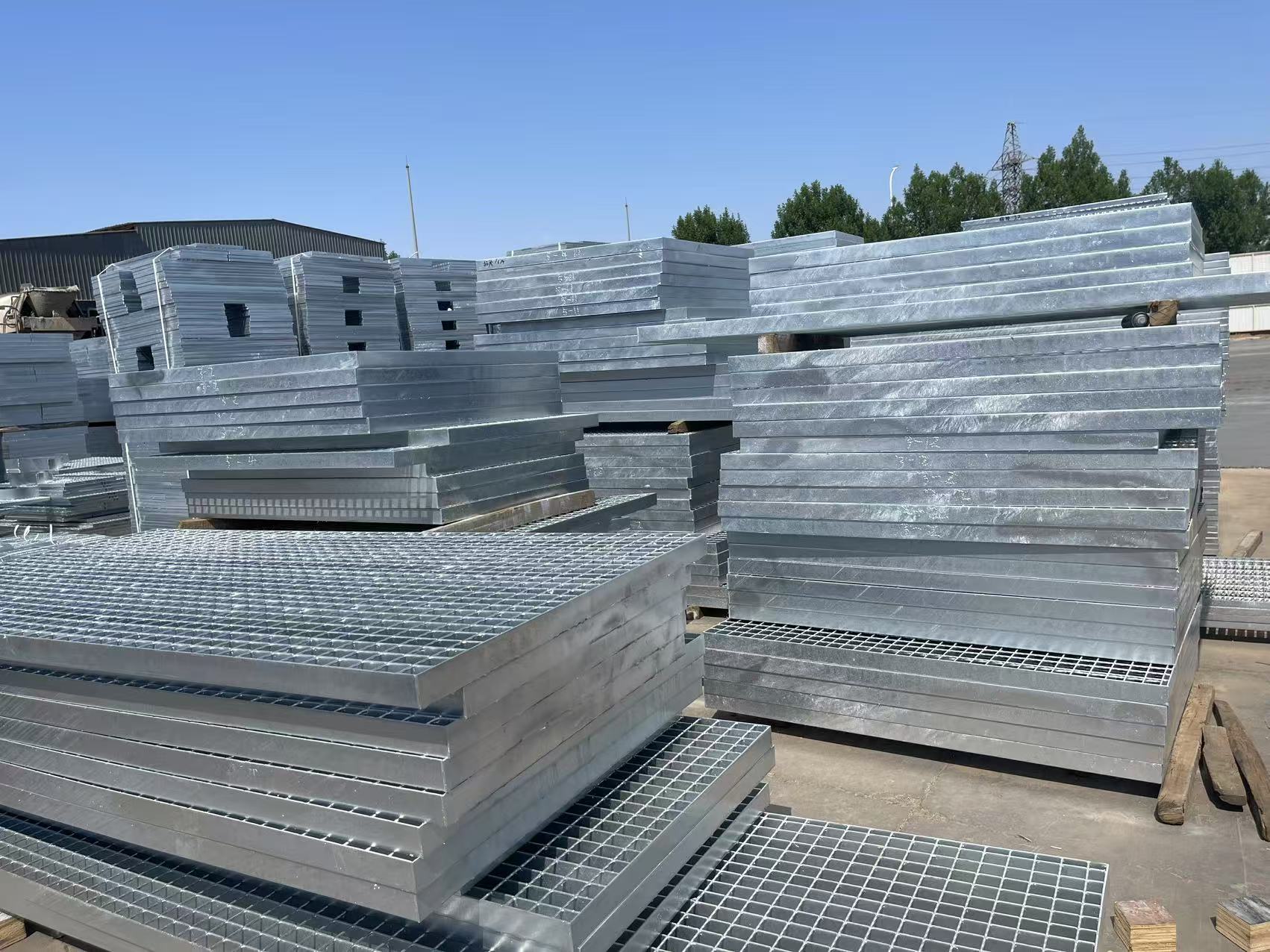
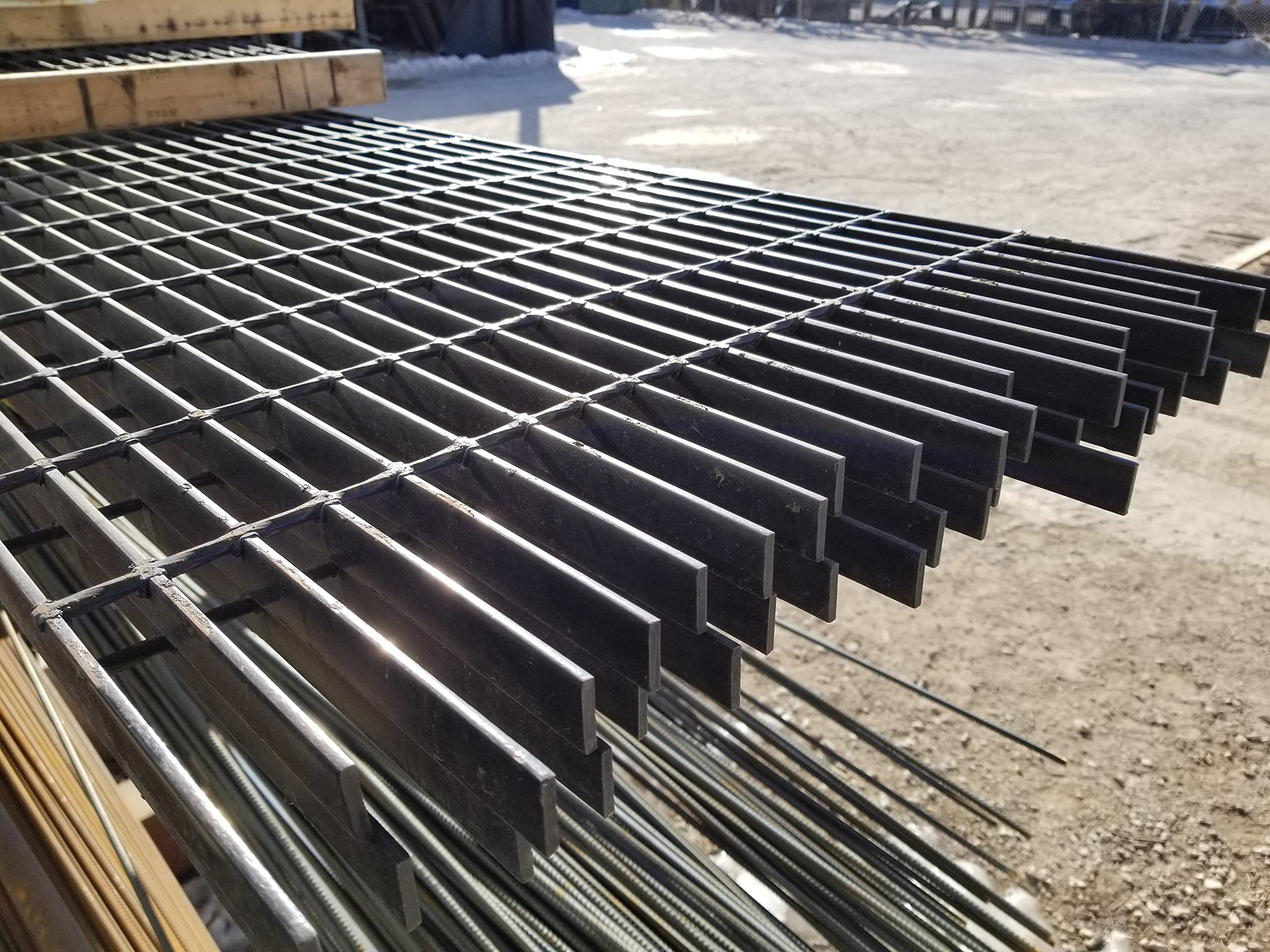
Welded steel grating is a prefabricated grid structure made from load-bearing bars (typically flat bars) with cross bars welded perpendicularly at each intersection using resistance welding technology. The result is a strong, open-grid panel that provides excellent load distribution, slip resistance, and drainage while reducing dead load compared to solid steel plates.
The Resistance Welding Process
The manufacturing process begins with high-quality steel bars, usually in carbon steel (ASTM A36), galvanized steel, or stainless steel (304/316). The steps are:
- Bar Preparation: Bearing bars are cut to precise lengths and aligned in parallel on the welding press. Cross bars are fed perpendicularly from a continuous coil or pre-cut lengths.
- Resistance Welding: Electrodes apply both pressure and electric current at each bar intersection. The electrical resistance generates sufficient heat to fuse the bars together without filler material. This forge welding process creates a homogenous joint that is stronger than the parent metal.
- Inspection: Every panel is visually inspected for weld integrity. The weld nugget must fully penetrate at each joint. Industry standards such as ANSI/NAAMM MBG 531 define the minimum acceptable weld shear strength.
- Finishing: Panels are descaled, deburred, and prepared for surface treatment — hot-dip galvanizing, powder coating, or mill finish depending on the application environment.
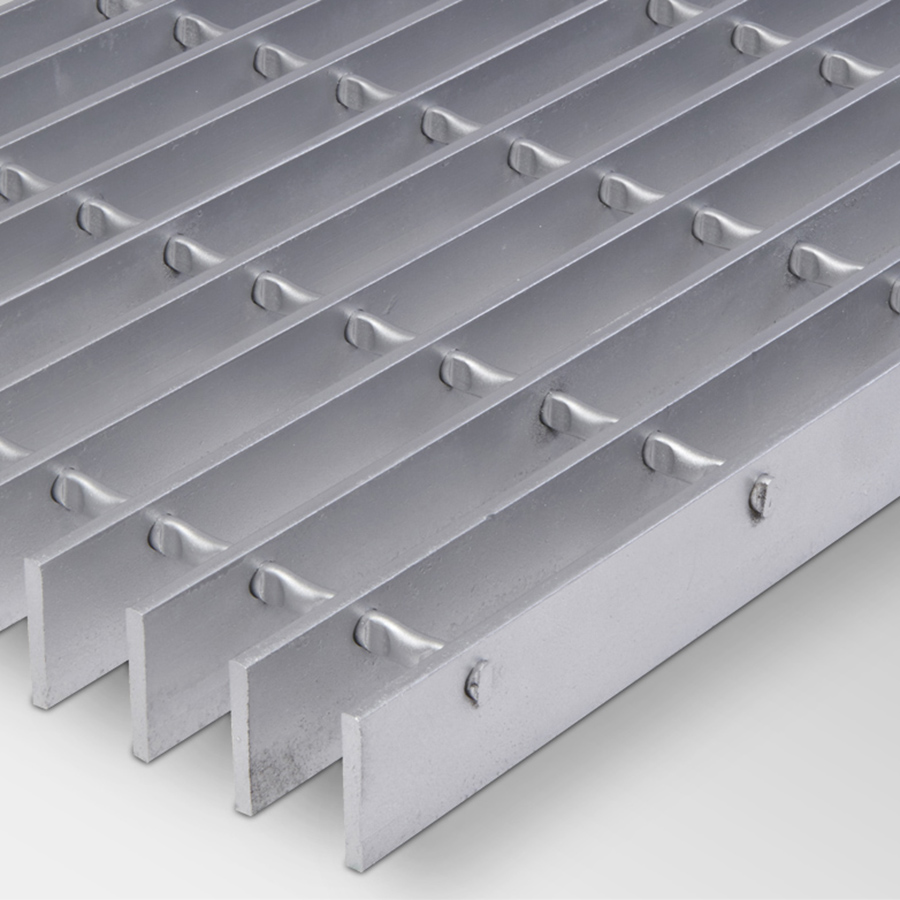
The resistance welding method distinguishes this product from press locked grating, where bars are mechanically interlocked without fusion. Because welded joints are metallurgically bonded, this type of grating offers superior structural integrity and is the preferred choice for heavy-load applications.
Materials and Surface Finishes
The performance and longevity depend heavily on material selection and surface finish:
| Material | Typical Grade | Common Applications |
|---|---|---|
| Carbon Steel (Mill Finish) | ASTM A36 / Q235 | Indoor platforms, walkways, general industrial |
| Hot-Dip Galvanized Steel | ASTM A123 / BS EN ISO 1461 | Outdoor walkways, water treatment, marine environments |
| Stainless Steel 304 | ASTM A240 | Food processing, pharmaceutical, chemical plants |
| Stainless Steel 316 | ASTM A240 | Offshore platforms, coastal infrastructure, high-corrosion |
| Aluminum | 6061-T6 | Lightweight architectural, lightweight walkways |
Hot-dip galvanizing is the most common finish for outdoor and corrosive environments. The zinc coating provides cathodic protection, sealing the steel from moisture and chemical exposure. For indoor applications where aesthetics matter, powder coating in custom RAL colors is increasingly popular.

Welded Steel Grating Specifications and Standard Sizes
Understanding the key welded steel grating specifications is essential for selecting the right panel for your project. The main parameters include bearing bar size, bar spacing, panel dimensions, and material grade. These directly affect load capacity, weight, open area, and cost.
Bearing Bar and Cross Bar Configurations
The bearing bar is the primary load-carrying member. Its dimensions — width, thickness, and depth (height) — determine the structural performance of the panel.
| Parameter | Typical Range | Notes |
|---|---|---|
| Bearing Bar Depth (Height) | 1" to 6" (25 mm to 152 mm) | Common sizes: 1", 1-1/4", 1-1/2", 2", 2-1/2", 3", 4", 5", 6" |
| Bearing Bar Thickness | 1/8" to 1/4" (3 mm to 6 mm) | Most common: 3/16" (4.76 mm) and 1/4" (6.35 mm) |
| Bearing Bar Spacing (Center-to-Center) | 1-3/16" to 6" (30 mm to 152 mm) | Standard: 1-3/16" (30 mm), 1-3/8" (35 mm), 1-3/4" (44 mm), 2-3/8" (60 mm) |
| Cross Bar Spacing | 2" to 6" (50 mm to 152 mm) | Standard: 2" (50 mm) or 4" (100 mm) |
| Cross Bar Size | 1/4" to 1/2" (6 mm to 13 mm) | Twisted or square cross bars available |
The combination of bar depth and thickness is expressed as a size code. For example, a common specification is 2-1/4" x 3/16" — meaning 2.25-inch-deep bearing bars that are 0.1875 inches thick. A welded steel grating weight chart typically organizes data by these size codes.
Common Panel Dimensions
Available sizes vary by manufacturer, but industry-standard panel dimensions include:
- Standard Panel Width: Most commonly 3' (914 mm) or 4' (1219 mm). Custom widths up to 8' (2438 mm) are available for special applications.
- Standard Panel Length: 20' (6096 mm) is typical for stock panels. Custom lengths can reach 40' (12 m) depending on transportation constraints.
- Overall Height (Depth): Equal to the bearing bar depth. This determines the clearance required below the grating.
When specifying, you must also define the clear opening between bars. The open area percentage affects drainage, light transmission, and airflow. For pedestrian walkways, 1-3/16" bar spacing is common (approximately 70% open area). For industrial platforms carrying foot traffic, 1-3/8" to 1-3/4" spacing is typical.

Industry standards governing these specifications include:
- ANSI/NAAMM MBG 531: Metal Bar Grating Manual — the definitive US standard for design, manufacturing, and testing
- ISO 14122-2: International standard for permanent means of access to machinery — industrial platforms and walkways
- OSHA 1910.23: US safety requirements for walking-working surfaces
- BS 4592: UK standard for industrial flooring, walkways, and stair treads
Welded Steel Grating Load Capacity and Weight Chart
Welded steel grating load capacity is determined by the bearing bar dimensions, span length, and material grade. Engineers use standard formulas to calculate the maximum safe load a panel can support. Understanding these calculations is critical for safety and code compliance.
Load Capacity Calculation Methods
The load capacity is calculated based on the section modulus of the bearing bars and the allowable stress of the material. The key formula used in NAAMM MBG 531 is:
- Uniform Load (psf): W = (S * Fb * N) / (L * 12) — where S = section modulus per bar, Fb = allowable bending stress, N = number of bearing bars per foot of width, and L = clear span in feet.
- Concentrated Load (lbs): P = (4 * S * Fb * N) / L — used for point loads such as wheel loads or equipment feet.
- Deflection Limit: Most applications limit deflection to L/200 or L/100 depending on use. Pedestrian walkways typically require L/200.
Allowable bending stress (Fb) for carbon steel grating is typically 18,000 psi for A36 steel. For stainless steel grades, it varies: 304 at 16,700 psi and 316 at 16,700 psi. Hot-dip galvanizing does not reduce load capacity since the zinc coating is a protective layer, not a structural component.
Always consult a structural engineer when designing for heavy loads or critical safety applications. Many manufacturers provide online load tables or calculation tools based on NAAMM standards.
Typical Weight Chart by Bar Size
A welded steel grating weight chart is an essential reference for estimating dead load, transportation costs, and structural support requirements. Below is a typical weight chart for carbon steel panels with standard 1-3/16" (30 mm) bar spacing and 4" (100 mm) cross bar spacing:
| Bar Size (Depth x Thick) | Weight (psf) | Weight (kg/m²) | Common Span (ft) |
|---|---|---|---|
| 1" x 1/8" (25 x 3 mm) | 4.2 | 20.5 | 2'-6" |
| 1-1/4" x 3/16" (32 x 5 mm) | 6.3 | 30.8 | 3'-0" |
| 1-1/2" x 3/16" (38 x 5 mm) | 7.2 | 35.2 | 3'-6" |
| 2" x 3/16" (51 x 5 mm) | 8.9 | 43.5 | 4'-6" |
| 2-1/4" x 3/16" (57 x 5 mm) | 9.8 | 47.9 | 5'-0" |
| 2-1/2" x 1/4" (64 x 6 mm) | 13.5 | 65.9 | 6'-0" |
| 3" x 1/4" (76 x 6 mm) | 15.3 | 74.7 | 7'-0" |
| 4" x 1/4" (102 x 6 mm) | 19.1 | 93.3 | 9'-0" |
| 5" x 1/4" (127 x 6 mm) | 22.7 | 110.8 | 11'-0" |
| 6" x 1/4" (152 x 6 mm) | 26.1 | 127.4 | 13'-0" |
Note that weight increases with closer bar spacing. For example, a panel with 7/8" spacing weighs approximately 30% more than the same panel with 1-3/16" spacing. For stainless steel, add approximately 1-2% to account for the higher density. Always verify the exact weight with the manufacturer, as cross bar size and type also affect total panel weight.

Welded Steel Grating vs Press Locked Grating
One of the most common debates in the grating industry is welded steel grating vs press locked grating. While both products serve similar functions, they differ fundamentally in manufacturing method, structural performance, and ideal applications. Understanding the difference between welded steel grating vs press locked grating helps specifiers choose the right product for each project.
| Comparison Factor | Welded Steel Grating | Press Locked Grating |
|---|---|---|
| Joint Method | Resistance welding — metal fusion at each intersection | Mechanical pressure lock — no heat, no fusion |
| Joint Strength | Weld shear strength exceeds parent metal | Friction-based; integrity depends on manufacturing tolerances |
| Load Capacity | Higher — suitable for heavy industrial loads | Moderate — best for light to medium loads |
| Appearance | Smooth welds, consistent finish | Clean aesthetic with no welding marks |
| Material Options | Carbon steel, galvanized, stainless steel | Carbon steel, stainless steel, aluminum |
| Cost | Moderate — efficient automated production | Lower — cost-effective for lighter applications |
| Customization | Readily customized in bar size, spacing, dimensions | Limited by tooling; best in standard configurations |
| Maintenance | Weld joints are permanent; no loosening over time | Potential for loosening under vibration or cyclic loading |
When to Choose Welded Steel Grating
- Heavy loads are expected — industrial platforms, truck access, equipment support
- Long spans are required — the welded joint transfers load between bearing bars effectively
- Vibration is present — the rigid panel resists joint loosening
- Safety-critical applications — the monolithic structure provides fail-safe performance
When Press Locked Grating Is Preferred
- Cost is the primary driver for light-duty applications
- A smooth, weld-free appearance is desired for architectural use
- Aluminum grating is needed (aluminum is difficult to resistance-weld)
- Loads are light — pedestrian access, mezzanine landings, decorative screens
For most industrial applications where structural integrity and long-term reliability are priorities, the welded option is recommended. The joints provide permanent connections that maintain their strength over decades of service, even in demanding environments with temperature fluctuations, moisture, and mechanical stress.
Applications of Welded Steel Grating
This grating type serves dozens of industries thanks to its combination of strength, open area, and durability. It suits environments where solid flooring would be impractical or unsafe.
Industrial and Commercial Applications
- Platforms and Walkways: The most common application. It provides safe, slip-resistant walking surfaces for industrial mezzanines, equipment platforms, and elevated catwalks. The open grid allows debris, water, and oil to fall through, keeping the walking surface cleaner than solid plate.
- Trench and Drainage Covers: Municipal and industrial trenches use these panels for covers that support traffic loads while allowing water inflow. Heavy-duty configurations with 2-1/2" or deeper bars are common in roadway drainage and factory floor trenches.
- Safety Barriers and Machine Guards: Panels serve as perimeter guarding around machinery. The open design provides visibility through the barrier while preventing personnel from contacting moving parts.
- Stair Treads: Frequently fabricated into stair treads with serrated bearing bars for additional slip resistance. These treads meet OSHA and IBC requirements for industrial stairs.
- Cooling Tower Decks: Power plants and industrial facilities use galvanized panels for cooling tower platforms. The corrosion-resistant finish withstands constant moisture and chemical treatment.
- Mining and Quarrying: Heavy-duty configurations provide walkways and access platforms in mineral processing plants where impact resistance and load capacity are critical.
Architectural and Safety Applications
- Facade Screens and Sunshades: Architects increasingly specify stainless steel panels for building facades. The clean lines and uniform openings create striking visual patterns while providing solar shading and ventilation.
- Rooftop Walkways: Protective walkway systems on commercial roofs distribute foot traffic loads while protecting the roofing membrane. The elevated design keeps the walkway above standing water.
- Bridge Decking: Pedestrian bridges and light-traffic vehicular bridges use these panels as the deck surface. The open grid reduces dead load on the structure and provides natural drainage.
- Helipad Surfaces: Helipads on offshore platforms and buildings utilize this product for the landing surface. The open grid reduces turbulence and provides positive drainage.
- Security Grilles: Window and door security grilles fabricated from this grating offer robust protection without blocking light or airflow.
The applications of welded steel grating continue to expand as engineers discover new ways to leverage its unique combination of properties. From heavy industrial environments to high-end architectural projects, it delivers reliable performance with minimal maintenance.
How to Install Welded Steel Grating
Proper installation is critical for safety and long-term performance. While the process is straightforward, attention to detail in bearing bar alignment, support structure preparation, and fastening methods determines the quality of the final result.
Preparation and Support Structure
- Support Steel: Panels must rest on clean, level structural steel members. Minimum bearing length is typically 1" (25 mm) for pedestrian applications and 2" (50 mm) for heavy-load applications.
- Panel Orientation: The bearing bars must run perpendicular to the support members. This ensures that loads transfer directly through the bearing bars to the supporting structure.
- Cutting and Fitting: Panels can be cut using abrasive saws, plasma cutters, or band saws. For galvanized panels, cut edges should be touched up with cold galvanizing compound or zinc-rich paint to restore corrosion protection.
Fastening Methods
Panels must be secured to prevent lateral movement, uplift, or dislodgement. Common methods include:
- Welding: The most secure method. Panels are fillet-welded to the support structure at every bearing bar or at intervals specified by the engineer. Weld size is typically 1/4" (6 mm) fillet weld, 2" (50 mm) long.
- Grating Clips: Galvanized or stainless steel clips provide mechanical fastening without site welding. Saddle clips, J-clips, and G-clips are common. Install clips at least every 4 feet along each support member.
- Bolting: Through-bolting with fish plates or angle brackets is used when the grating must be removable for access to equipment below.
Safety Considerations During Installation
- Use proper lifting equipment for large panels — a standard 4' x 20' panel can weigh 600-800 lbs depending on bar size
- Install temporary safety netting or guardrails if installing at height before permanent handrails are in place
- Verify that all fasteners are tightened to the specified torque
- Inspect cut edges for sharp burrs and deburr as needed
- Conduct a post-installation walk-down to check for excessive deflection or loose panels
Following manufacturer guidelines and applicable safety codes — such as OSHA 1910.23 for walking-working surfaces and ANSI/NAAMM MBG 531 for installation — ensures a safe, durable installation that will perform reliably for the service life of the structure.
Conclusion
Welded steel grating remains the gold standard for industrial flooring, walkway, and platform applications worldwide. Its resistance-welded construction delivers unmatched joint strength, uniform load distribution, and long-term reliability that mechanical locking systems cannot match.
This guide has covered the complete spectrum of knowledge about this product:
- Manufacturing: Automated resistance welding creates permanent, homogenous joints at every bar intersection
- Specifications: Bar depths from 1" to 6", thicknesses from 1/8" to 1/4", and multiple spacing options provide flexibility for any load requirement
- Load Capacity: Proper engineering using NAAMM standards ensures safe performance with deflection limits appropriate to each application
- Weight Charts: Panel weights range from approximately 4 psf for light-duty to 26+ psf for heavy-duty configurations
- Surface Finishes: Hot-dip galvanizing, stainless steel, and powder coating options protect against corrosion in diverse environments
- Applications: From industrial platforms and trench covers to architectural facades and bridge decking, it adapts to virtually any structural need
When selecting for your project, always work with reputable manufacturers who follow ANSI/NAAMM MBG 531 standards. Request certified load tables, weight calculations, and weld inspection reports. Consider the total cost of ownership — including installation, maintenance, and service life — not just the initial purchase price.
For applications requiring maximum strength, permanent joints, and proven performance in demanding conditions, this solution is the engineering choice that delivers value for decades. Whether you are designing a new facility, upgrading an existing plant, or specifying materials for an infrastructure project, the information in this guide provides the foundation for confident, informed decision-making.